Chumash painters worked in a cave off a mountain road
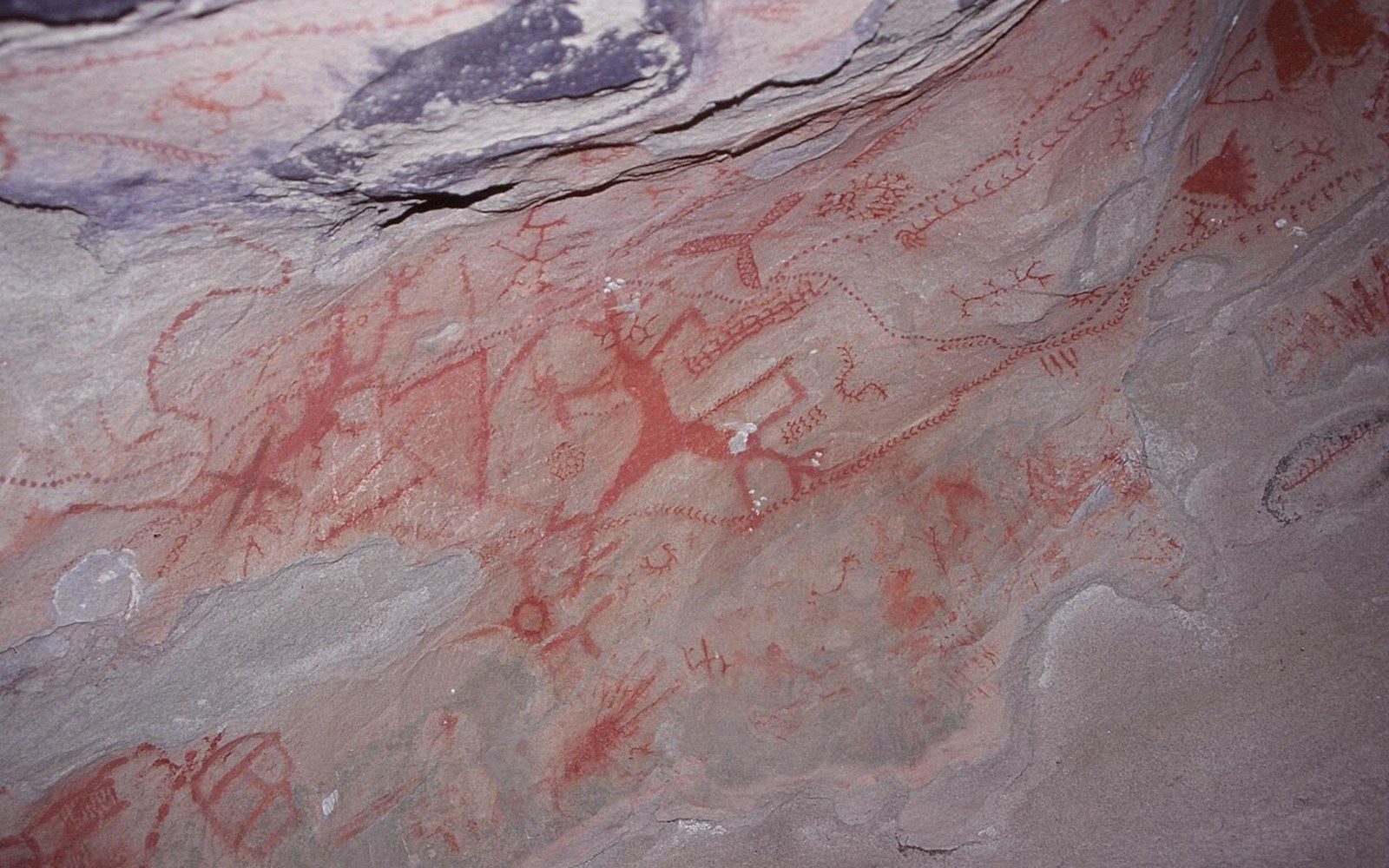
A small sandstone chamber holds the oldest images in the Santa Barbara region — polychrome figures painted by hand, gated now against the touch that would erase them.
The cave and what it holds
The Chumash Painted Cave sits in a sandstone outcrop on Painted Cave Road, a narrow, hairpin lane that climbs into the Santa Ynez Mountains above Santa Barbara. The site is a state historic park — California State Parks administers it — and the chamber itself is small enough to stand in without turning: perhaps twelve feet deep. What fills it is anything but modest. Discs, centipedes, wheeled forms, elongated figures and abstract shapes cover the ceiling and walls in black, white and red — the polychrome palette, meaning multiple colours applied with intention, that distinguishes Chumash rock art from the simpler monochrome marks found elsewhere in the region.
The pigments were mineral-based. Red came from ochre, black from charcoal or manganese, white from diatomite or gypsum. The Chumash ground these, mixed them with animal fat or plant oils and applied them with fingers, sticks or brushes. That the images have survived at all is partly geology: the sandstone overhang shields the chamber from direct rain, and the cave's relative humidity has stayed stable enough over centuries to preserve paint that would otherwise have flaked away. Heat, moisture and — above all — the oils from human skin are the enemies. The iron gate installed across the entrance exists entirely to prevent the kind of accidental contact that has damaged comparable sites elsewhere in California.
Who painted, and when
The Chumash were the indigenous people of the southern California coast from Malibu to San Luis Obispo and inland toward the San Joaquin Valley. Their territory at European contact in the late eighteenth century was one of the most densely populated regions north of Mexico. They were accomplished mariners — the tomol, a plank canoe, allowed crossings to the Channel Islands — and the rock art tradition that produced the Painted Cave was embedded in a ceremonial life managed by specialists called 'antap, priestly figures whose roles included astronomical observation and ritual. Many researchers link the most complex painted sites to 'antap activity, interpreting the disc forms as solar symbols and the cave itself as a place of winter-solstice ceremony.
Dating the images is genuinely difficult. Radiocarbon dating works on organic binder, and only where enough survives without contamination. Estimates place the bulk of the visible work in the period from roughly the sixteenth century to early contact, though some layers are likely older. The site shows repainting and overpainting, which means it was returned to across generations, not decorated once and abandoned.
- Bulk of visible workestimated sixteenth century to early contact period
- Evidence of repaintingmultiple generations returned to the site
- Iron gate installationto prevent contact damage; date of current gate not publicly specified by State Parks
Art before the category existed
It is worth pausing on what the Painted Cave is, because the word that keeps not appearing in older accounts is the obvious one. These are paintings — made by skilled image-makers who mixed pigments, chose a surface, composed forms across a curved space and returned to revise their work over time. The impulse to keep them in a separate category from what happens inside the Santa Barbara Museum of Art on State Street says more about institutional habit than about the objects themselves. The figures on that cave ceiling are as deliberate and as formally considered as anything made in the studios of the city below.
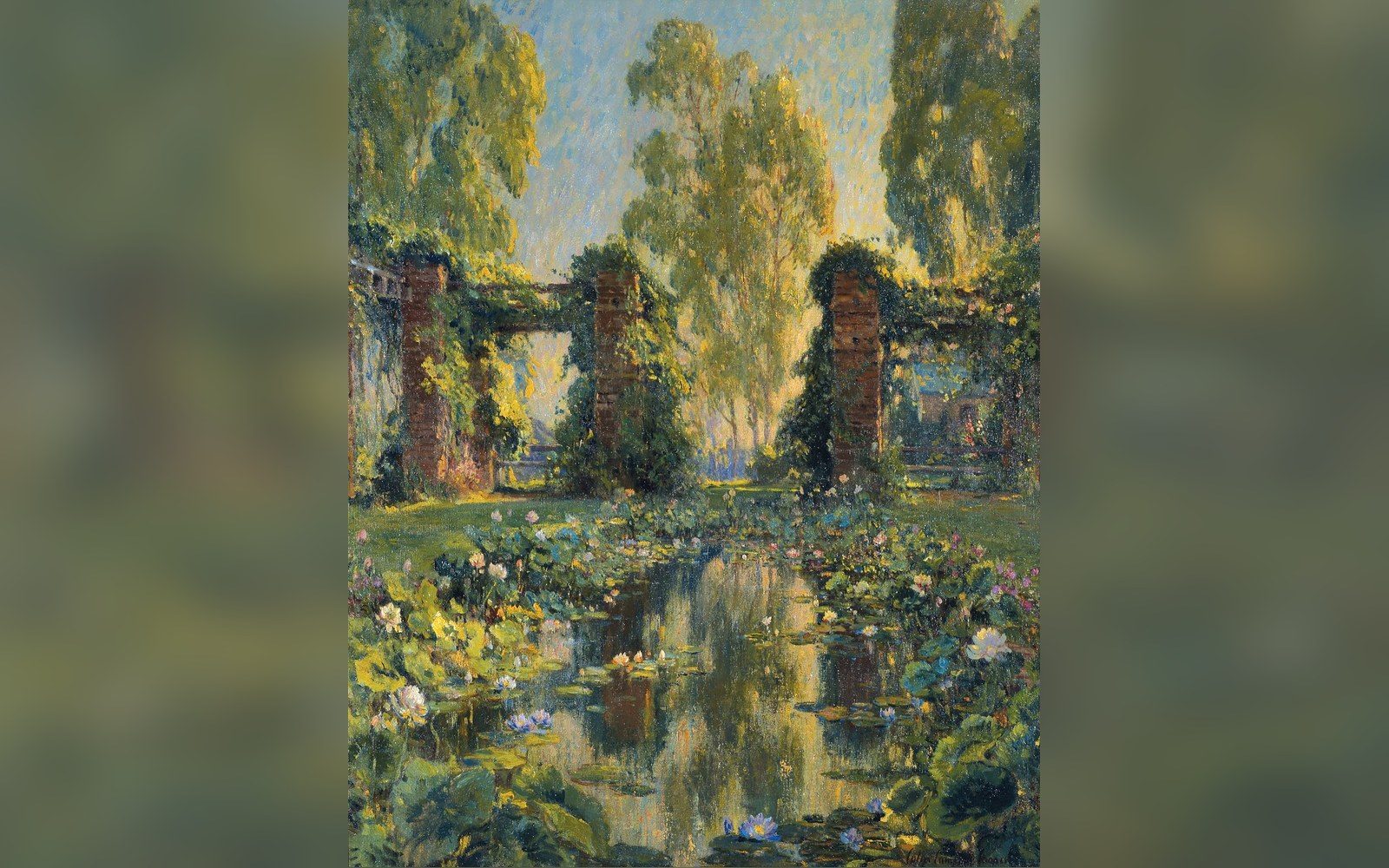
That the city's art life tends not to foreground this origin is one of the odder facts about a place that otherwise talks constantly about its visual inheritance. The plein-air painters who arrived in the late nineteenth and early twentieth centuries — Colin Campbell Cooper and Thomas Moran among them — were drawn by the same coastal light and the same mountain backdrop. They are woven into Santa Barbara's self-image in ways the Chumash painters are not, which is a curatorial and civic choice, and one that has been made repeatedly.
The gate is locked. You can see through it, and the images are visible. Parking is limited on a road built for single-file traffic. Go on a weekday and go early; the drive alone, winding out of the eucalyptus into chaparral, is worth the trouble.