Painters Came for the Light and Stayed for the Cheap Rent
Colin Campbell Cooper and Thomas Moran both worked on this coast, and the plein-air tradition arrived before any institution did.
The coast before the institutions arrived
Santa Barbara had no museum, no art school, no gallery district when the painters first arrived. What it had was the light — that specific quality of Southern California coastal light, diffuse and bright simultaneously, that makes shadows soft and distances readable in a way that almost nowhere on the East Coast or in Europe can match. The painters recognised it immediately. They came for a season and, more often than not, found reasons to stay.
The tradition they were extending was already old by the time it reached California. Plein-air painting — working outdoors, directly in front of the subject, rather than from studio sketches — had been the ambition of the Barbizon painters in France and the ideal of the Impressionists. By the 1880s and 1890s it had crossed the Atlantic, and artists working their way down the Pacific coast found that the combination of reliable sun, dramatic coastal geology and relatively low living costs suited the practice better than almost anywhere they had previously worked.
Thomas Moran came to the California coast with an already formidable reputation. His enormous paintings of Yellowstone, made in the early 1870s, had helped persuade Congress to designate it as the first national park — a case, rarely equalled since, of landscape painting directly influencing federal policy. He worked up and down the Pacific coast in the later decades of his life, and his engagement with the Western landscape was always grounded in intensive outdoor study before any studio synthesis began. The California coast, with its sea stacks, kelp beds and the particular way afternoon fog rolls in from the Pacific, gave him material he returned to repeatedly.
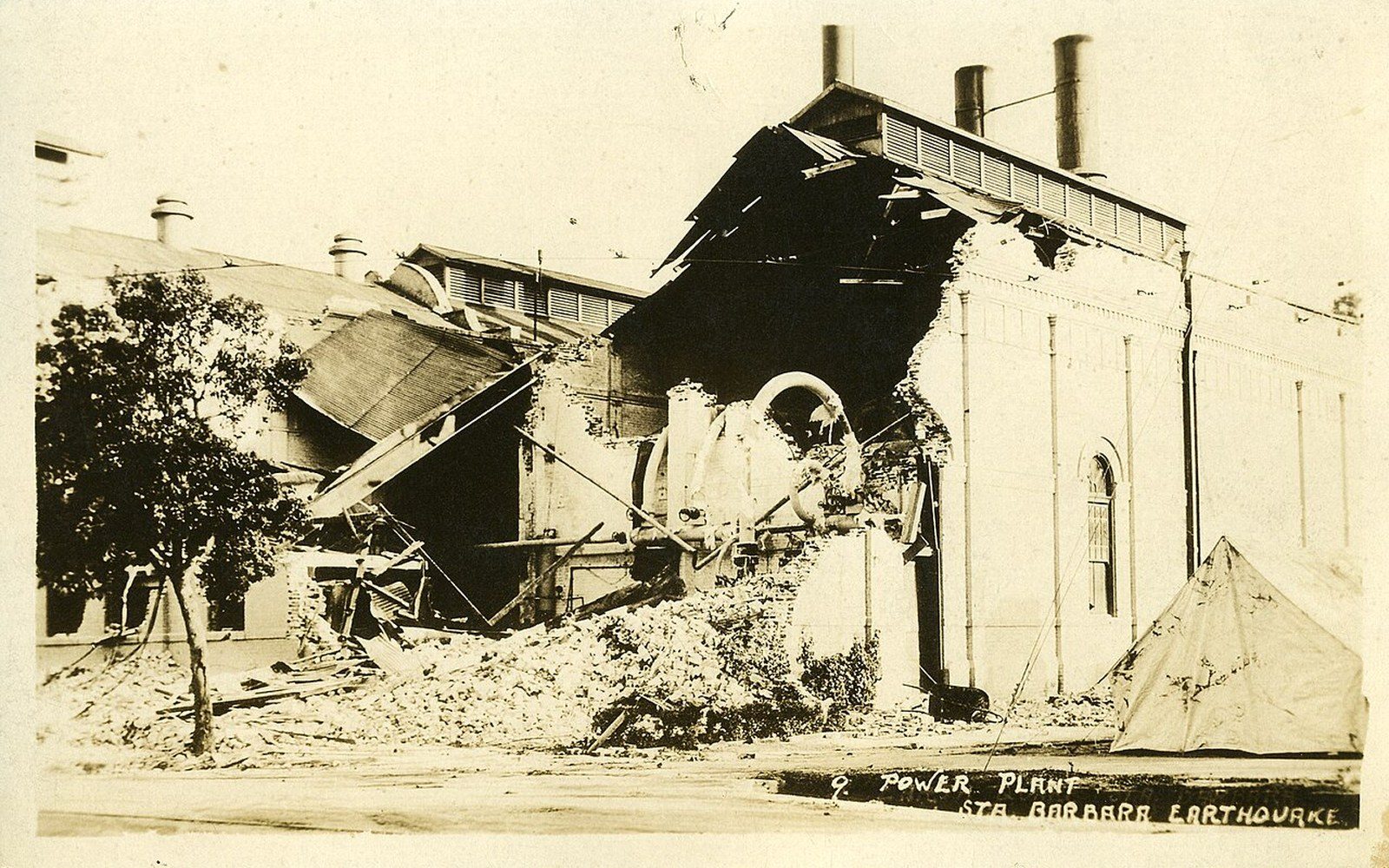
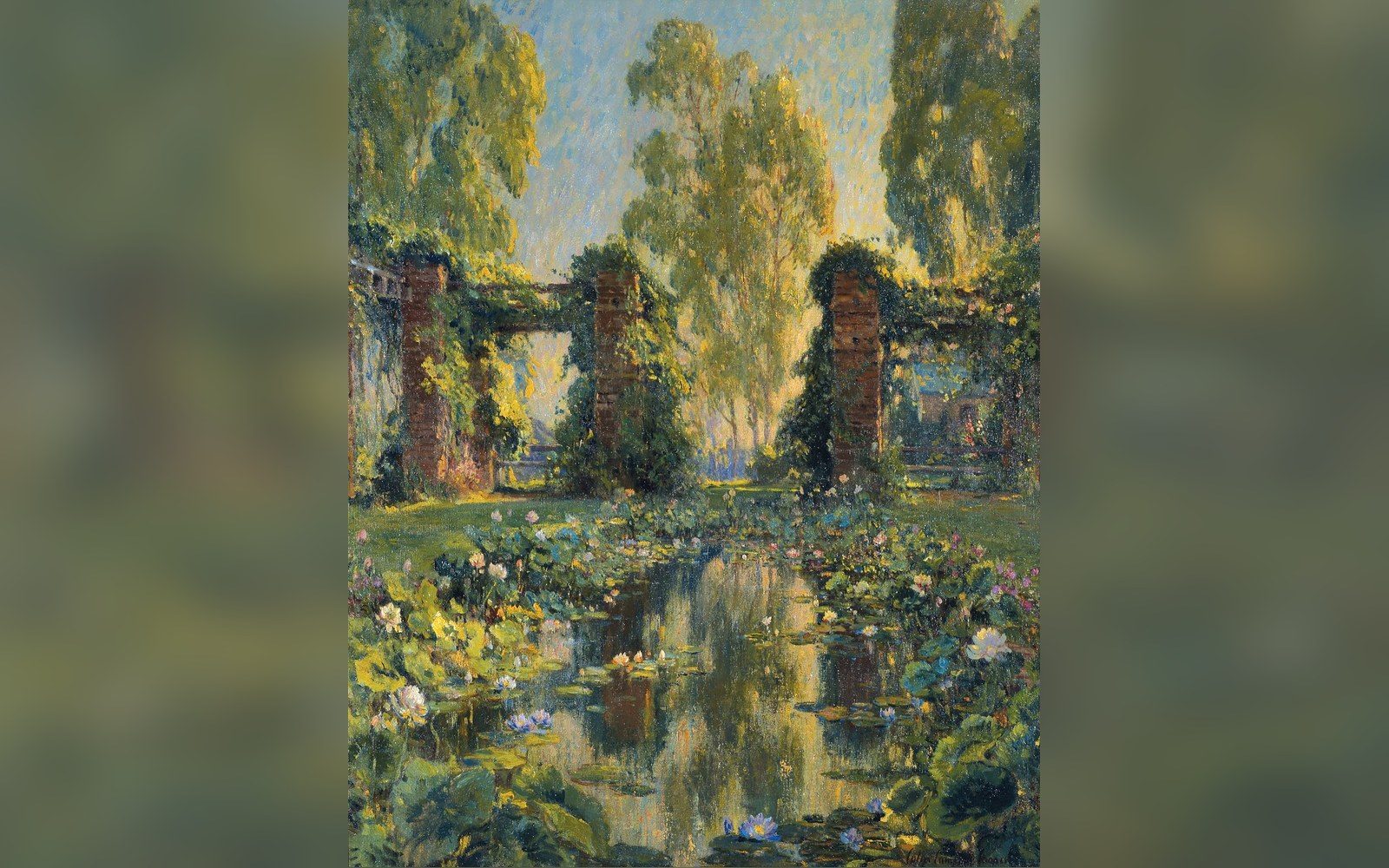
Colin Campbell Cooper arrived with a record of serious Impressionist work in the East and in Europe. He settled in Santa Barbara more lastingly than Moran did, and his output from these years is a vivid record of what the town looked like in the early twentieth century — the gardens, the missions, the hills behind the city, the harbour in different lights and seasons. Cooper's paintings of the Santa Barbara region constitute something close to a pictorial document: they show a city still forming itself, before the 1925 earthquake forced the architectural uniformity that now defines the downtown. His wife Emma Lampert Cooper was herself an accomplished painter, and their mutual presence helped establish Santa Barbara as a place where serious artists lived and worked rather than simply visited.
What the light actually does
It is worth being specific about what drew painters here, because the word "light" risks becoming a lazy cliché — a thing writers say about California the way they say "vibrant" about cities they have not troubled to describe. The light on the Santa Barbara coast has specific, describable qualities. The city faces south, unusually for the California coast, which means it receives direct sun for more hours of the day than coastal cities that face west. The Santa Ynez Mountains rise steeply just north of the urban edge, producing a thermal pattern that burns off morning cloud cover earlier than nearby areas. The result is a long window of workable outdoor light — the particular intensity of which shifts noticeably through the season, from the dry clarity of late summer to the cooler, more diffused luminosity of winter months. Plein-air painters are working against time as the light changes; the extended, stable working hours that Santa Barbara's geography provides are not incidental to its appeal.
Lockwood de Forest, whose family had deep roots in the East Coast establishment, had also been drawn to the quality of Southern California light by the time he built his presence in Santa Barbara. De Forest was primarily known as an interior designer and architect by this point, working in a tradition that brought teak carving from Ahmedabad into Californian domestic architecture — the kind of cross-cultural synthesis that would eventually make De Forest's houses a distinctive presence on Santa Barbara streets — but his sensibility was shaped in part by the same visual culture the painters inhabited. The plein-air world and the decorative arts world in early-twentieth-century Santa Barbara were not sealed off from each other; the same people attended the same houses and cared about the same questions of colour, light and the specificity of place.
A tradition that preceded the infrastructure
The institutions came later. The Santa Barbara Museum of Art did not open until 1941. The Brooks Institute, which would train generations of photographers and visual artists, was founded in 1945. The Contemporary Arts Forum — which would operate for nearly four decades as a kunsthalle, a non-collecting exhibition space presenting contemporary work without building a permanent collection — was not established until 1976. What all of these organisations inherited was a tradition of serious artistic engagement with the region that had been built up across the preceding half-century by working painters who arrived with no institutional support and stayed because the conditions — the light, the relative affordability of the place, the absence of a dominant art-world centre demanding their attention — suited sustained practice.
That affordability deserves emphasis. Santa Barbara is not cheap now, and has not been for some decades. But for the painters of the late nineteenth and early twentieth century, the town offered what the standard artistic biography of the period almost always requires: proximity to interesting subject matter combined with low enough costs that a working artist could eat and rent a studio on the proceeds of occasional sales. The California coast was in this sense structurally similar to Brittany in France or Whitby in England — places where working artists clustered not primarily because of cultural prestige but because the economics of daily life were not hostile to sustained unprofitable work.
The mission building that dominates the upper edge of the city — the Old Mission Santa Barbara, founded in 1786 — was an obvious and frequently painted subject, its ochre walls and red-tiled roof supplying the warm middle tones that plein-air painters prize. The harbour, the Channel Islands visible on clear days across the water, the gardens of the great houses, the foothills running up toward the mountain — all of these appear in the work produced by Cooper and by the network of artists whose presence he helped anchor. What they were making, without necessarily intending to, was a visual identity for the city that would prove remarkably durable.
- Early 1870sThomas Moran's Yellowstone paintings; beginning of sustained Western landscape work
- Late 19th centuryPlein-air painters begin working the California coast
- Early 20th centuryColin Campbell Cooper settles in Santa Barbara; Emma Lampert Cooper working alongside him
- 1786Old Mission Santa Barbara founded (primary painted subject for generations)
- 1925Earthquake reshapes downtown; pre-earthquake visual record in Cooper's paintings becomes historically significant
- 1941Santa Barbara Museum of Art opens
- 1945Brooks Institute founded
- 1976Contemporary Arts Forum established
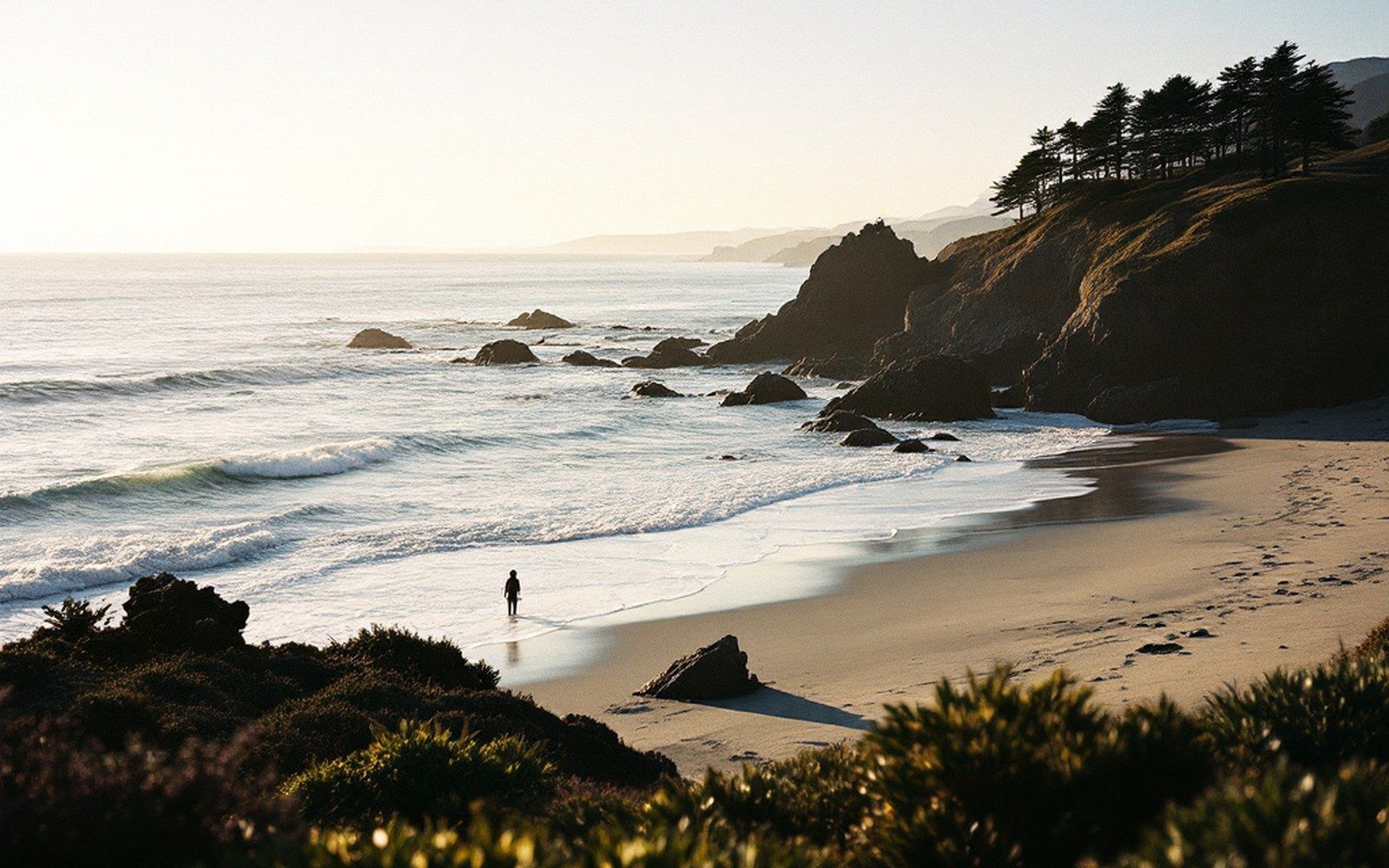
What the painters left behind
The durability is not only sentimental. The plein-air tradition shaped what subsequent generations expected serious art in Santa Barbara to look like, and that expectation created a conservative undertow that would eventually make the arrival of the Contemporary Arts Forum in 1976 feel genuinely contested. The Forum's commitment to non-collecting contemporary practice — video, installation, work that did not resolve into a framed image of a known place in good light — was not operating in a neutral environment. It was operating in a city whose visual culture had been formed by painters who came for the light, who found the landscape morally as well as aesthetically compelling, and who left behind a body of work that still anchors the permanent collections of the Santa Barbara Museum of Art and the UCSB Art, Design and Architecture Museum alike.
That is not a reason to diminish what Cooper and Moran and the wider plein-air community built here. It is simply to note that every tradition casts a shadow, and that the shadow in this case was specific and long. The painters gave Santa Barbara its first sustained visual culture. They did not, of course, give it its last.