A Review Board Made One Style Effectively Compulsory
The Architectural Board of Review set Spanish Colonial Revival as the condition of rebuilding, and the rule outlasted the emergency that produced it.
How a bureaucratic body turned an emergency aesthetic into a permanent city character
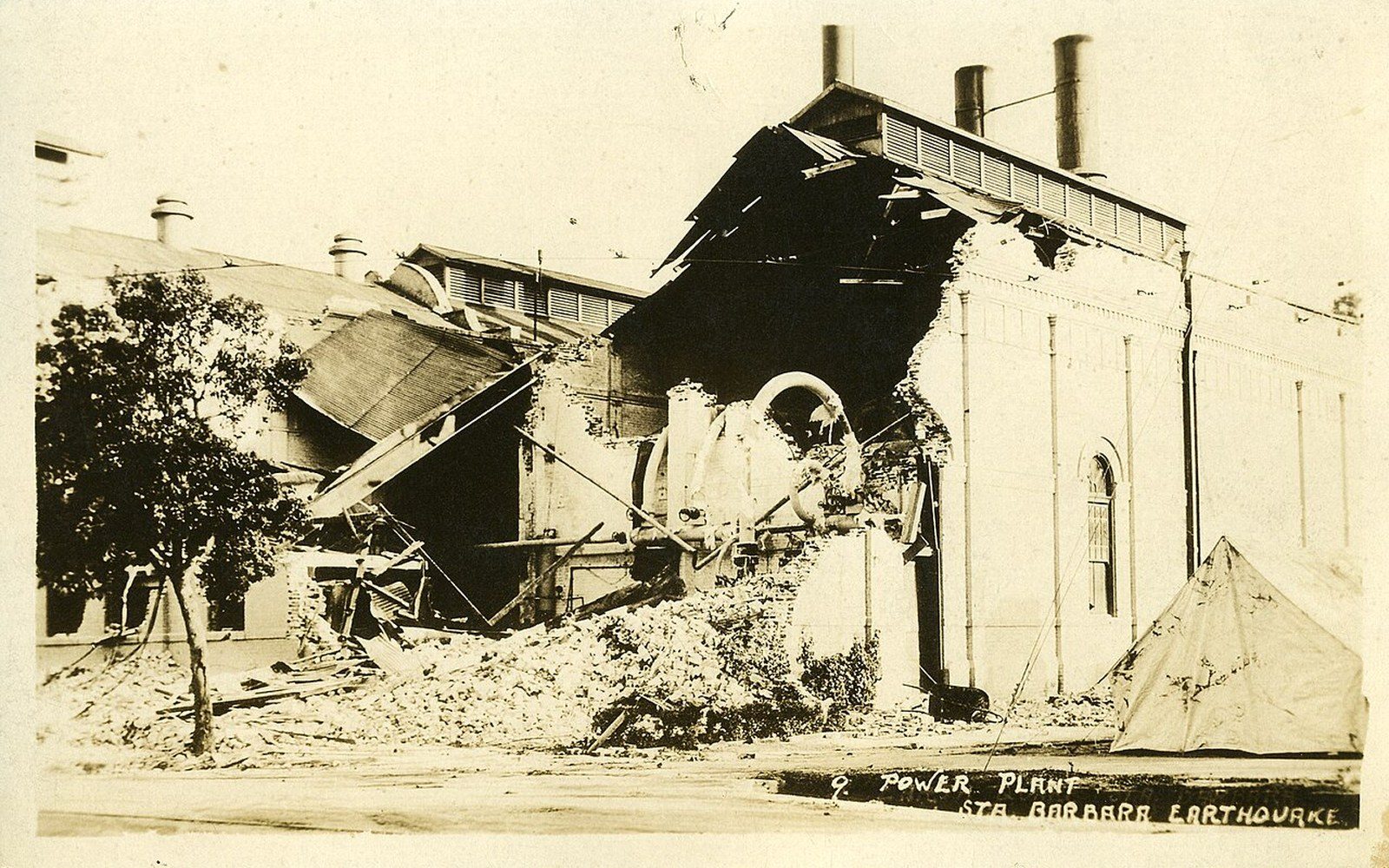
The earthquake that struck Santa Barbara on 29 June 1925 lasted roughly thirteen seconds. The rebuilding took years, and the architectural argument it settled has never really been reopened. When the city chose Spanish Colonial Revival as its recovery style, it did so partly through conviction and partly through a new kind of institutional muscle: the Architectural Board of Review, a body whose guidance hardened, over successive decades, into something close to a requirement.
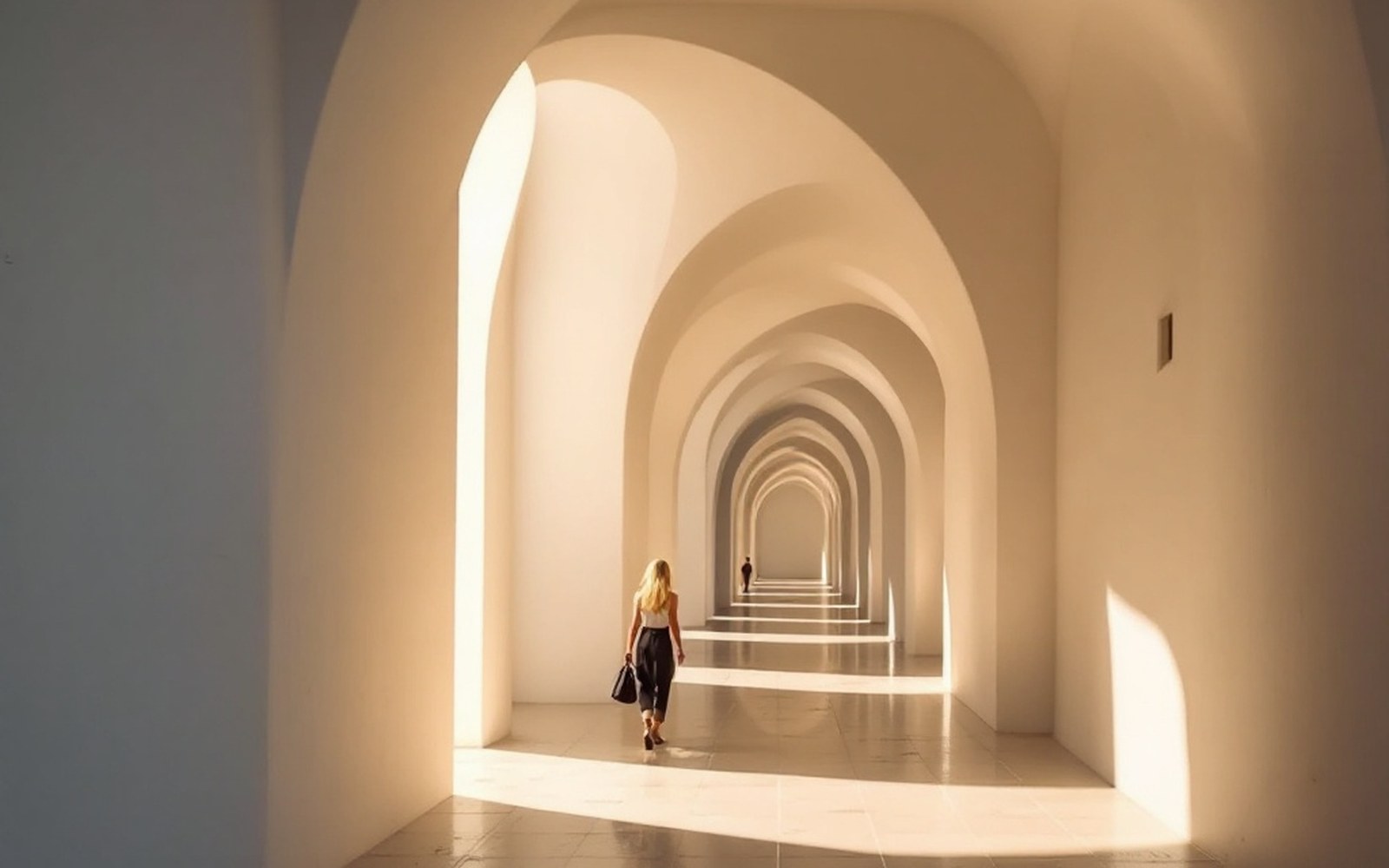
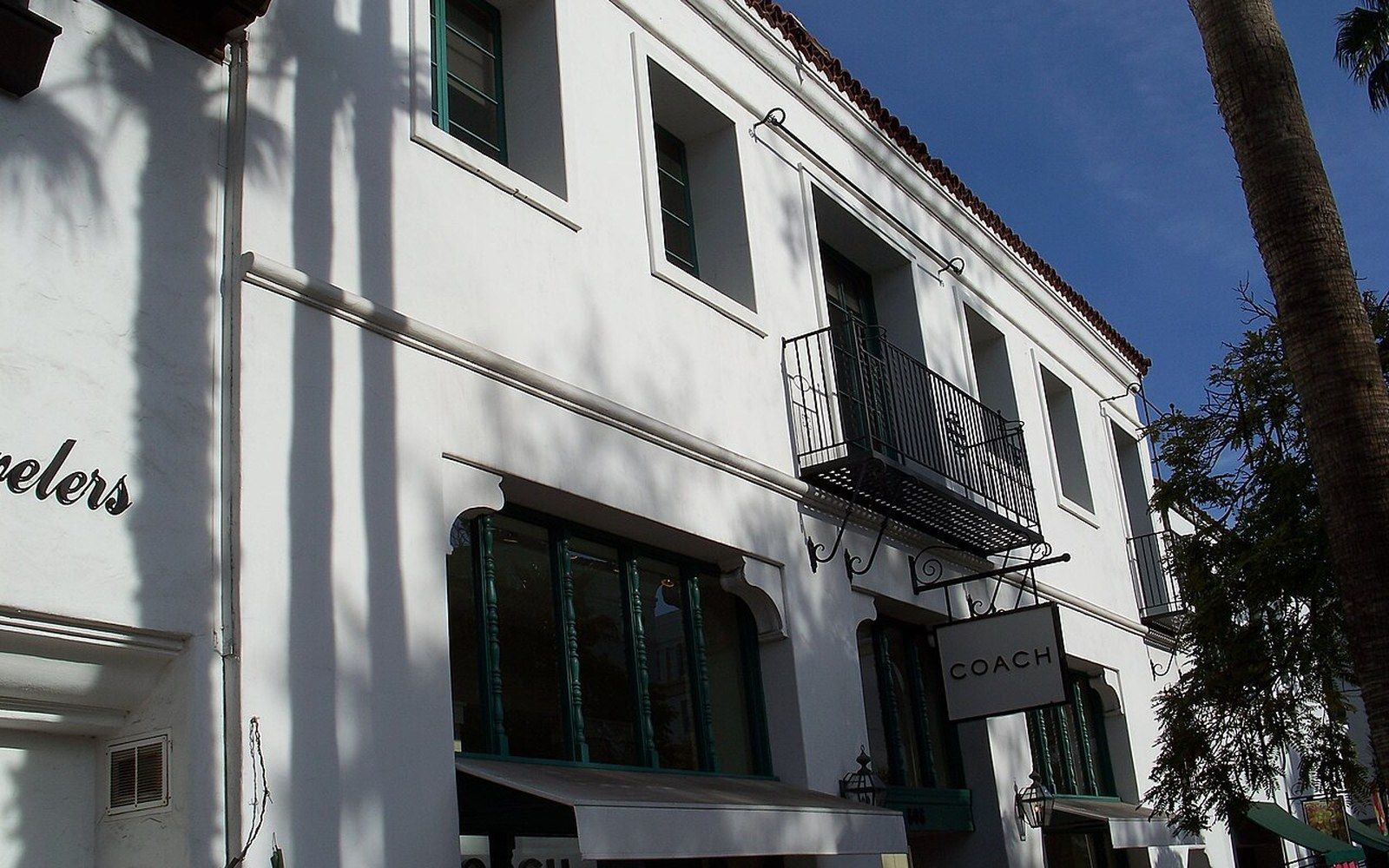
The Board had existed before the earthquake. Santa Barbara's boosters and civic reformers had been pushing a Mediterranean identity since at least the early 1920s, convinced that visual coherence was a competitive asset — a way to distinguish a small city from the sprawl spreading north and south along the California coast. What the 1925 disaster did was hand the Board an emergency mandate. With State Street in rubble, the question of what would replace it could not be deferred. The Board moved quickly, and the answer it promoted was consistent: Spanish Colonial Revival, with its white stucco walls, low-pitched red-tile roofs, arched openings and ironwork ornaments. Buildings that conformed got approvals. Buildings that did not were sent back for revision.
- Spanish Colonial Revival
- the white-stucco, red-tile, arched idiom the Board promoted as the city's recovery style
- Loggia
- a roofed gallery open on one side; a recurring feature in the style's civic and commercial buildings
- Design review
- a process in which a board evaluates proposed buildings before permits are issued; technically advisory, practically influential
The architecture of persistence
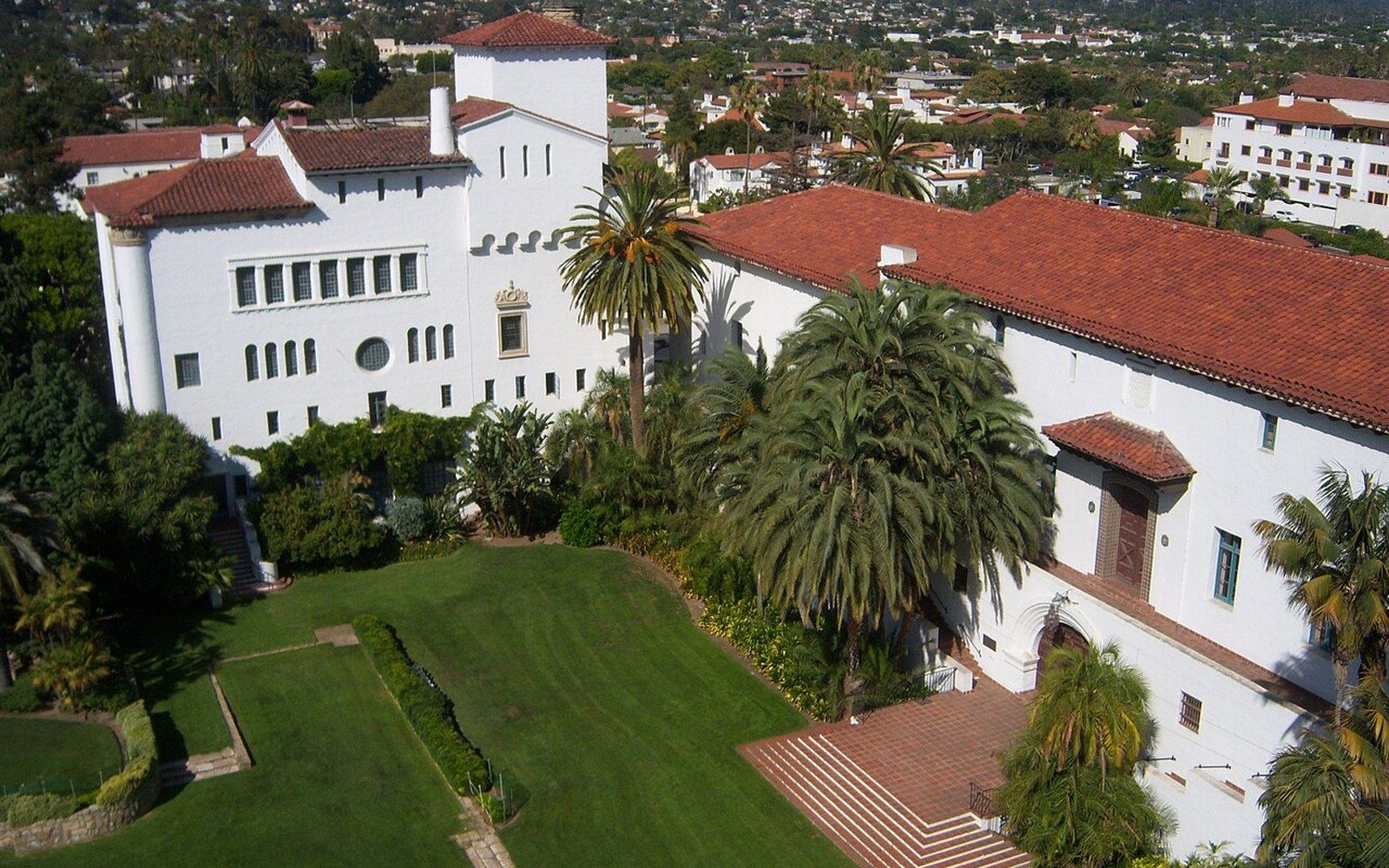
The Santa Barbara County Courthouse, completed in 1929, became the rhetorical centrepiece of this project — a civic building so lavishly detailed, with its painted mural room, its arched loggias and its open tower overlooking the city, that it made the style feel like a natural inheritance rather than an imposed one. The Courthouse was not a commercial calculation; it was a statement of aspiration, and it did what monumental civic architecture usually does: it raised the bar for everything around it. Developers who might otherwise have built cheaply now faced a public exemplar of what the style could achieve at its most ambitious.
The Board's authority rested on review rather than outright prohibition. Technically, an owner could propose any design. In practice, the review process created strong incentives toward conformity. Delays cost money; revisions cost time; a design that arrived in Spanish Colonial Revival idiom moved faster. Over decades, this soft compulsion produced hard results. Walk along State Street or into El Paseo — the 1920s shopping arcade that predates the earthquake reconstruction and helped model the style's commercial possibilities — and the streetscape coheres in a way that almost no other American city of comparable size can claim.
The Architectural Board of Review has operated continuously, making Santa Barbara's system one of the longest-running municipal design-review regimes in the United States. Its persistence is partly explained by the fact that the style it promotes is genuinely popular: residents and visitors have repeatedly shown, through surveys and political choices, that they regard the visual character of the city as worth protecting. But popularity does not fully account for longevity. What accounts for it is institutional embedding — the Board sits within the city's planning process, so that challenging its authority would mean challenging planning itself.
- 1925Earthquake strikes Santa Barbara, 29 June; State Street heavily damaged
- 1929Santa Barbara County Courthouse completed; becomes the style's civic benchmark
- Pre-earthquakeEl Paseo arcade already modelling Spanish Colonial Revival at commercial scale
- OngoingArchitectural Board of Review continues to operate within city planning process
What the rule costs and what it buys
Critics of design review regimes — and there are serious ones — argue that enforced stylistic consistency suppresses architectural invention, raises construction costs, and tends to freeze a city's self-image at the moment the rules were written. In Santa Barbara's case, those rules were written in grief and urgency, by people who had just watched their city collapse. That origin is not a neutral fact. It means the style carries an emotional charge that ordinary planning guidelines rarely acquire, and it means that arguing against the style can feel, to some residents, like arguing against recovery itself.
What the rule buys is legibility. A visitor arriving in Santa Barbara understands almost immediately that the built environment has been intentionally shaped — that the arches and tile and stucco are not accident. This legibility has economic consequences: the tourist economy is partly sold on the image the Board has maintained. It has cultural consequences too. The coherent streetscape is a kind of collective artwork, one that individual buildings participate in without any single architect controlling. Whether that is a creative achievement or a creative constraint depends entirely on what you think architecture is for.