A county courthouse built as though it were Spain
The Santa Barbara County Courthouse opened in 1929 with a mural room, a tower and a sunken garden. It is a working court and the town's argument in one building.
The town's argument made in stone and tile
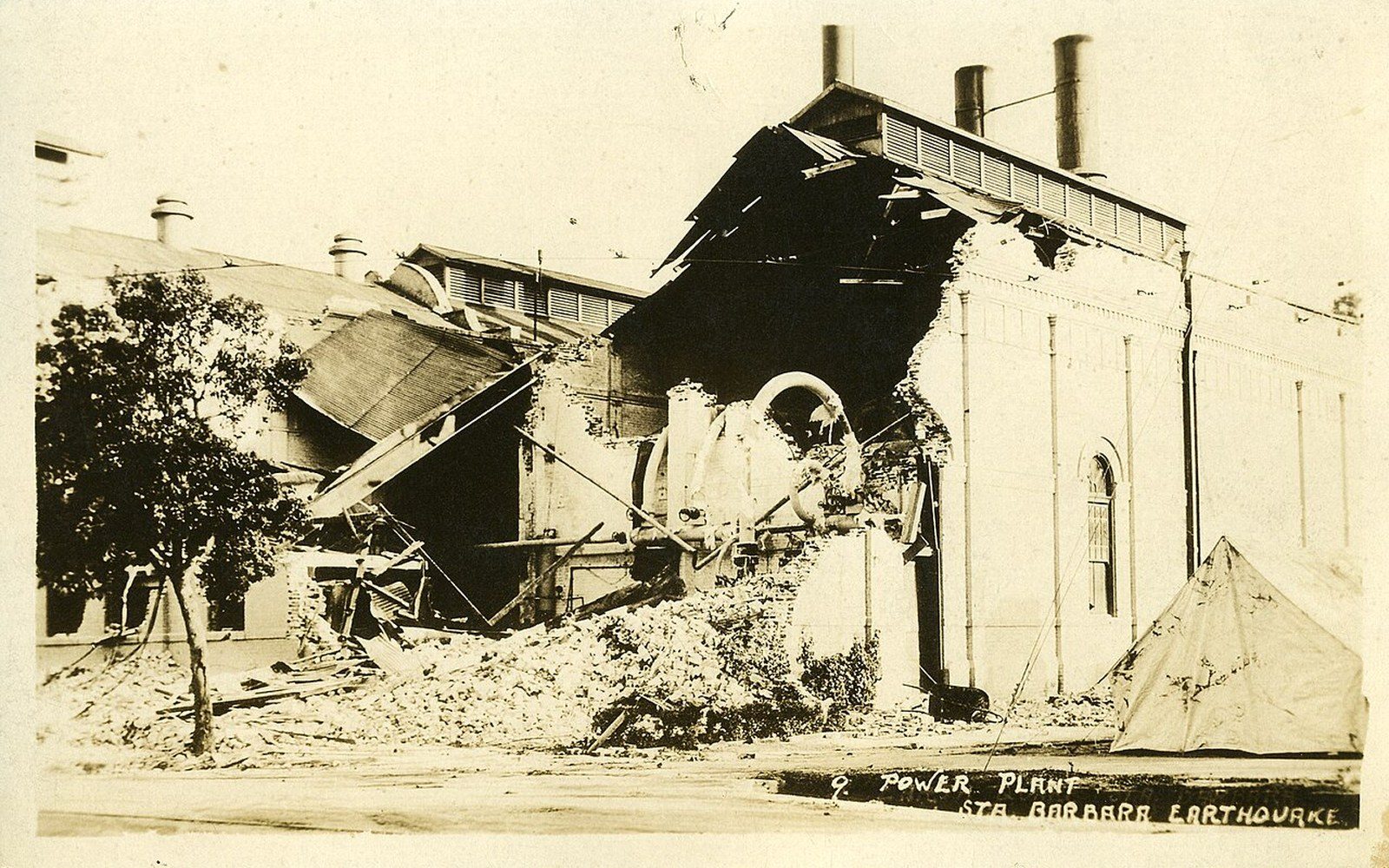
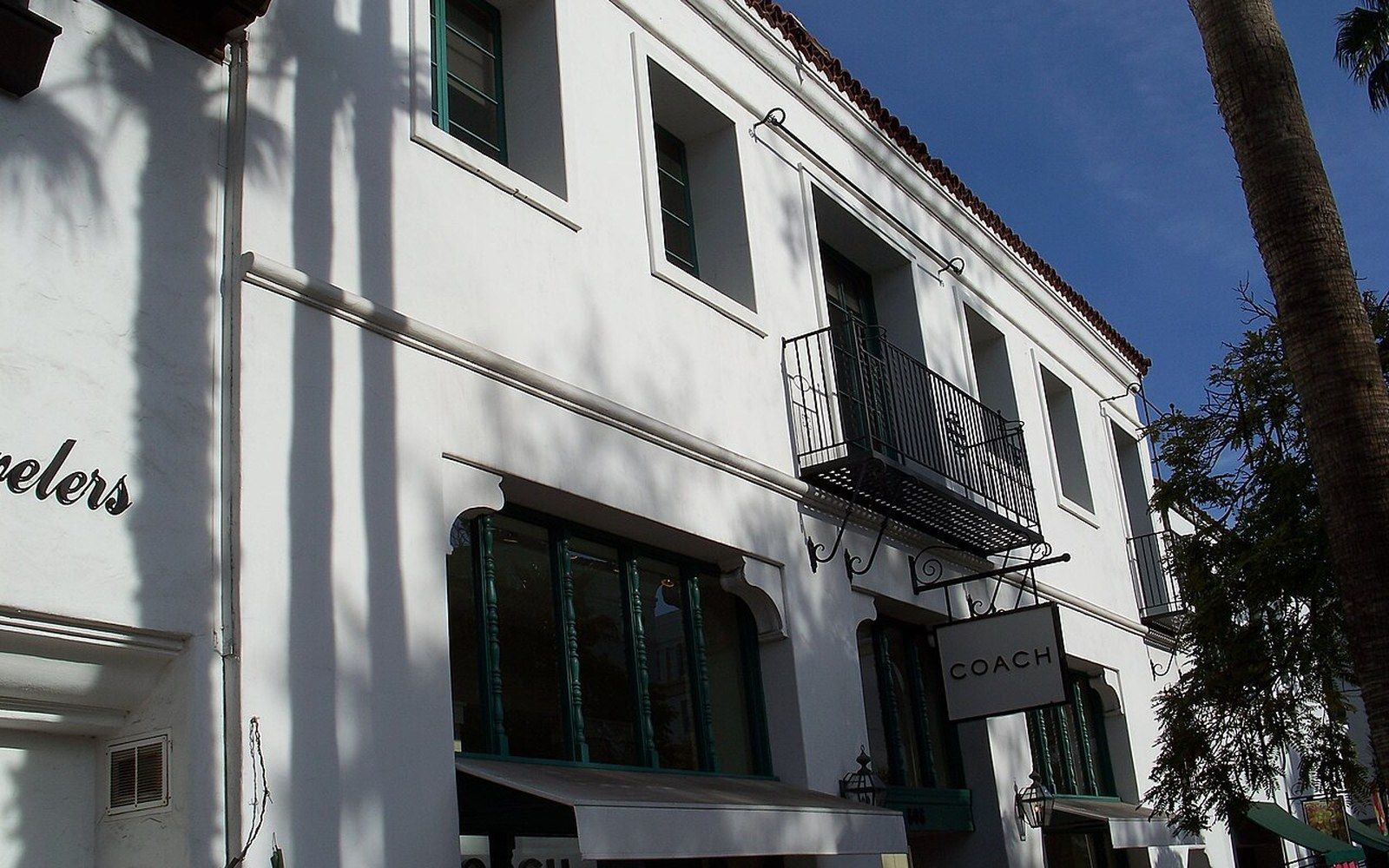
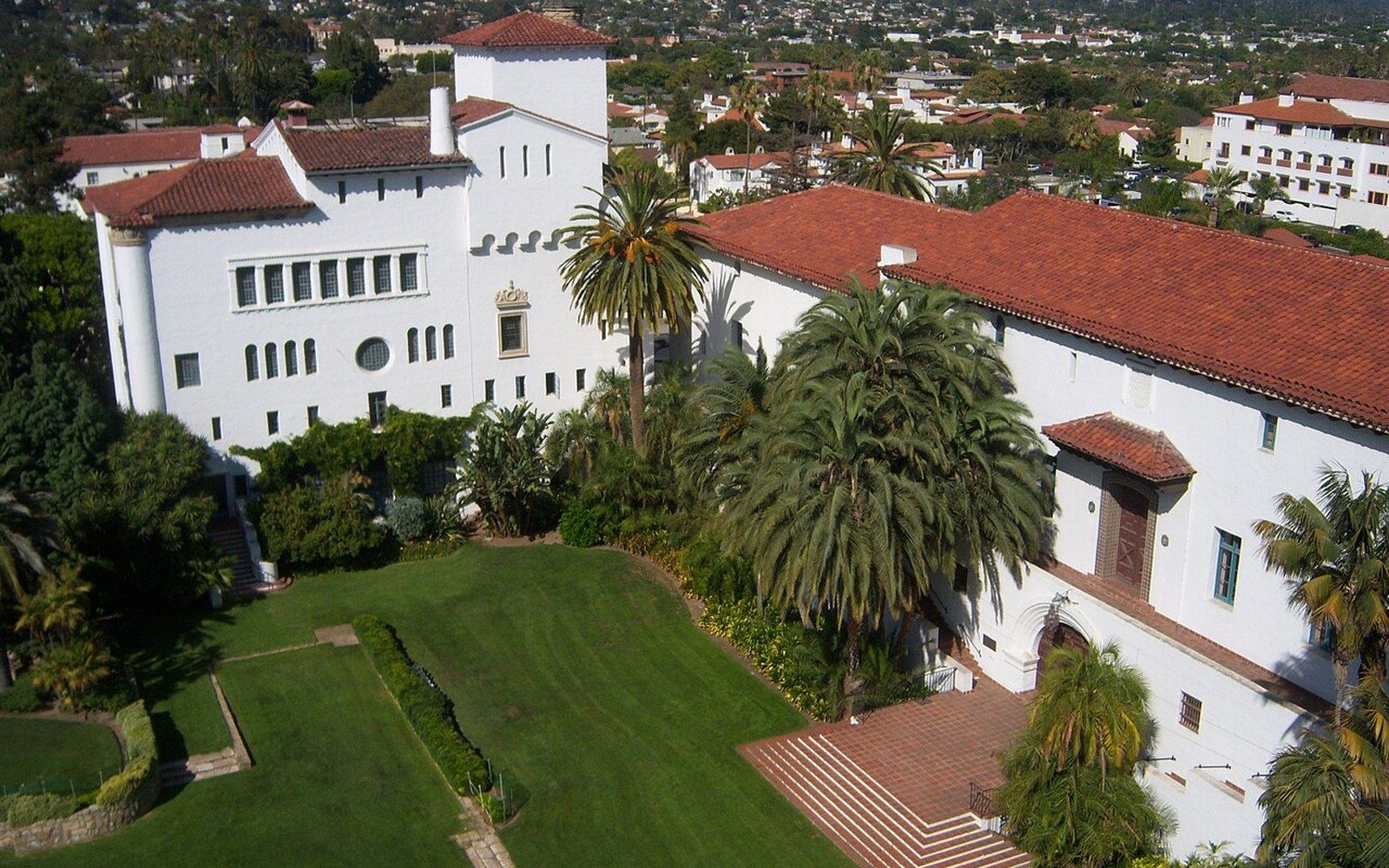
The Santa Barbara County Courthouse opened in 1929, four years after the earthquake that reshaped the city's ambitions. It is, by most accounts, the finest example of Spanish Colonial Revival architecture in California — a working court of law dressed in hand-painted Tunisian tile, Moorish arches and a clock tower that looks borrowed from Seville. That it functions as a place where people pay parking fines and face felony charges only makes it stranger, and better.
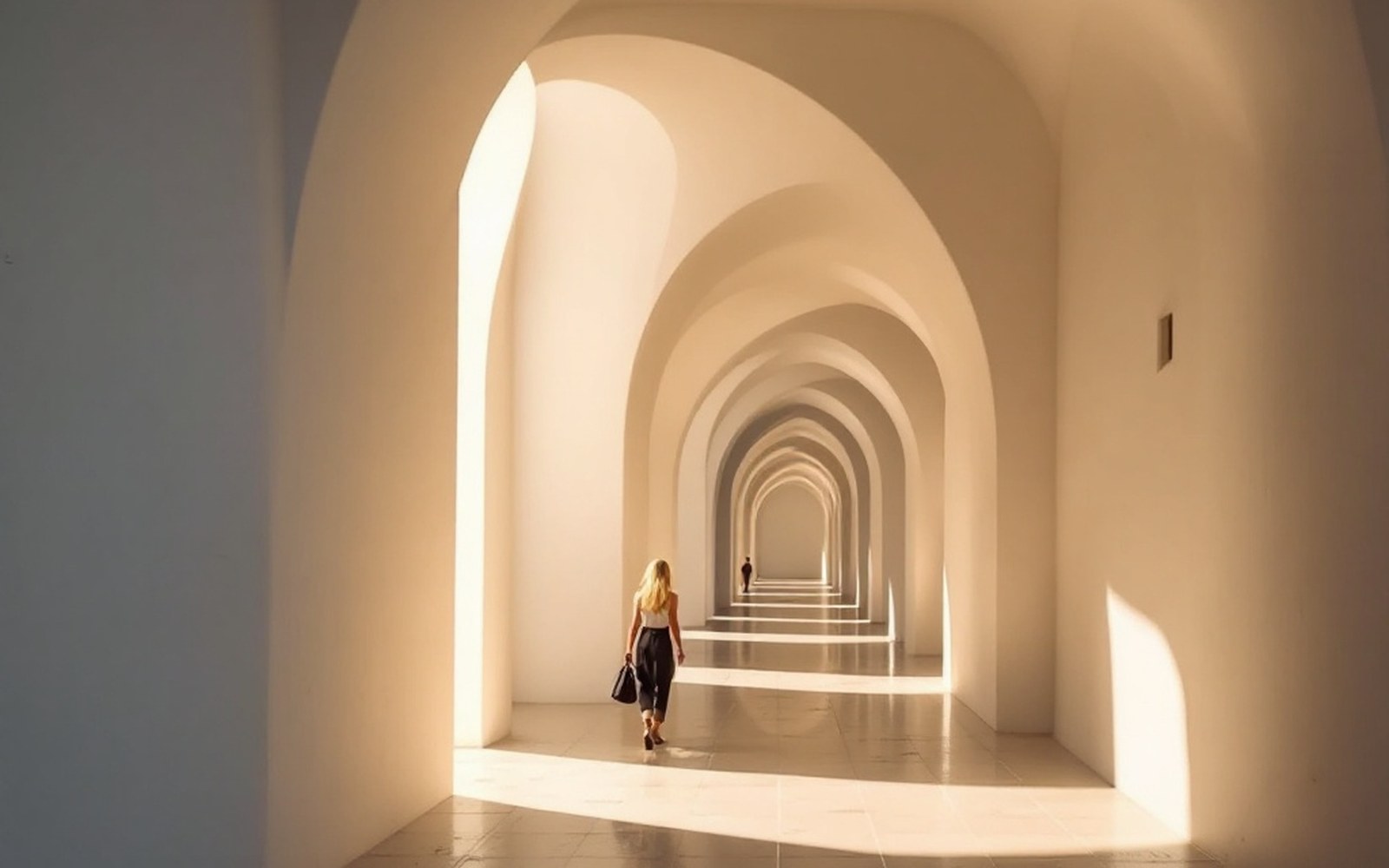
The building was designed by William Mooser III, whose firm had worked extensively along the California coast. What Mooser delivered on Anacapa Street was not a civic monument in the Roman Republican tradition — no columns, no pediment, no marble steps announcing authority. Instead, the courthouse sprawls like a monastery around a sunken garden, its corridors open to the air through loggias — colonnaded galleries that face inward toward the lawn — and its walls washed in an off-white that catches the afternoon light differently at every hour. The Architectural Board of Review, which had been hardening the Spanish Colonial Revival style into something approaching law since the post-earthquake rebuild, did not need to press Mooser particularly hard. The ambition was already there.
Inside, the Mural Room on the second floor carries a continuous painted panorama by the artist Daniel Sayre Groesbeck. The murals were painted by Groesbeck, a Hollywood illustrator who had worked on Cecil B. DeMille productions, and they depict the history of Santa Barbara from Chumash settlement through Spanish colonisation, Mexican governance and American statehood. They are heroic in scale, consciously romantic in sentiment and not particularly interested in complicating their own mythology. They are also genuinely beautiful, and the room in which they hang — with its carved wooden ceiling, its chandeliers and its long windows framing the Santa Ynez Mountains — is one of the most extraordinary public interiors in the American West.
The tower, the garden, the working day
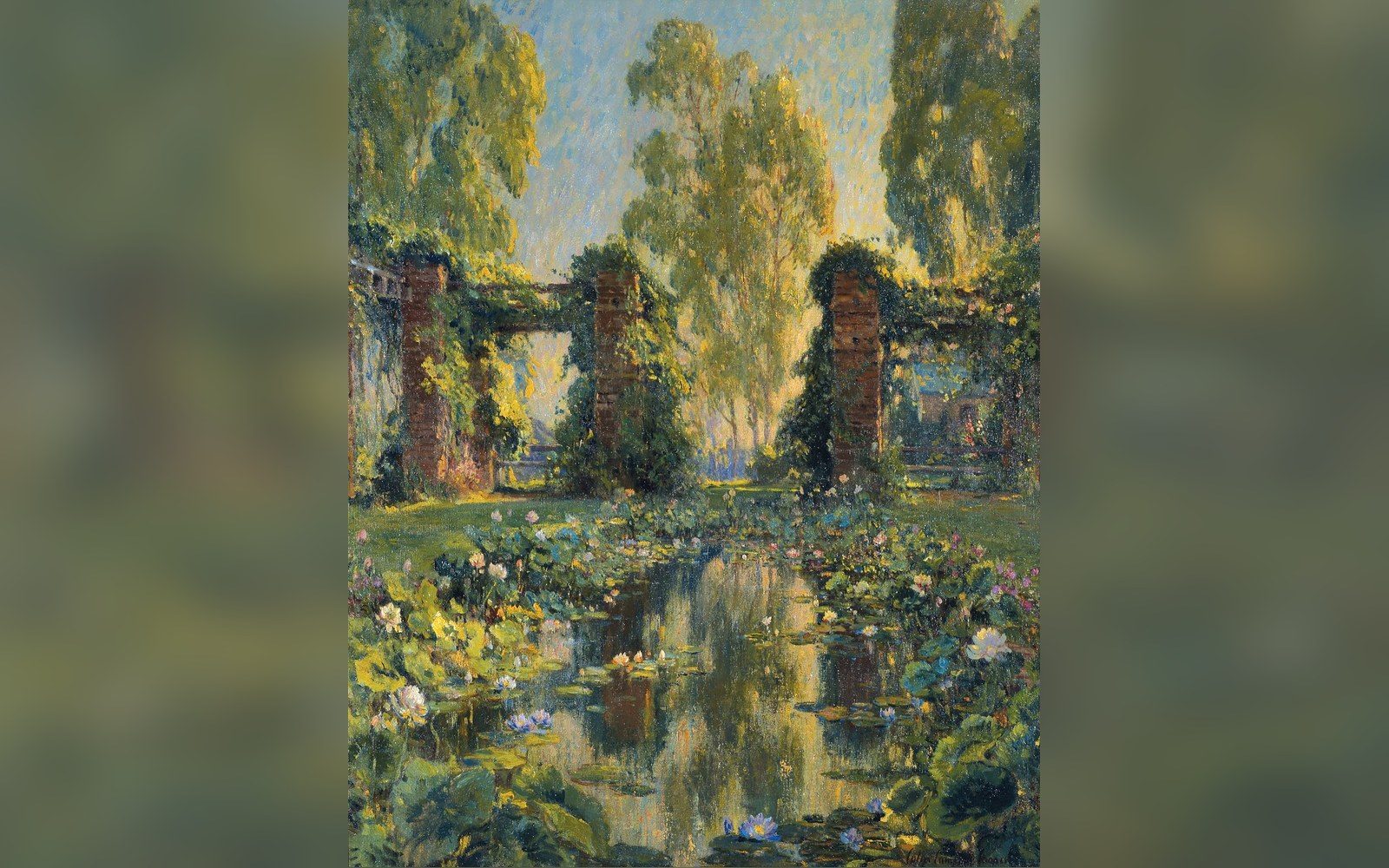
The clock tower, known as El Mirador, rises roughly 85 feet above the grounds and offers an unobstructed view across the city to the Pacific — a view plein-air painters had been chasing on canvases since Thomas Moran and Colin Campbell Cooper worked this coast in the early twentieth century. The tower is open to the public on most weekdays, and the view from the top reveals how thoroughly the courthouse aesthetic became the city's dominant grammar: red tile roofs extending in every direction, broken only by palms and the occasional Monterey cypress.
The sunken garden below sits between the courthouse's two main wings and functions as an informal civic lawn. Weddings happen there. Lawyers eat lunch there. During the 1970s and 1980s it hosted outdoor concerts and public gatherings that would have seemed incongruous in any court precinct designed along conventional Anglo-American lines. The garden is not incidental to the building; it is the building's argument, made in grass and bougainvillea, that public architecture can be generous without being monumental.
That argument has aged reasonably well. The Santa Barbara County Courthouse was added to the National Register of Historic Places, and it draws visitors who have no legal business there — architecture students, tourists, the merely curious — in numbers that any museum would find acceptable. The Santa Barbara Museum of Art sits a few blocks north on State Street; the UCSB Art, Design and Architecture Museum holds the working drawings of buildings that aspire to matter; but the courthouse is the one structure in the city that most people, asked to defend Santa Barbara's claim to architectural seriousness, reach for first.
William Mooser III was not building in a vacuum.
William Mooser III was not building in a vacuum. The style had been gaining institutional momentum since the 1915 Panama-California Exposition in San Diego, where Bertram Goodhue's buildings demonstrated that Mediterranean forms could carry the weight of American civic life. What Santa Barbara did, in the decade after its earthquake, was take that demonstration and apply it to an entire city at once. The courthouse is where that project reached its most sustained expression — one building that became a town's idea of itself.
- 1915Panama-California Exposition in San Diego demonstrates Spanish Colonial Revival at civic scale
- 1925June earthquake reshapes State Street and accelerates the city's architectural ambitions
- 1929Santa Barbara County Courthouse opens, designed by William Mooser III