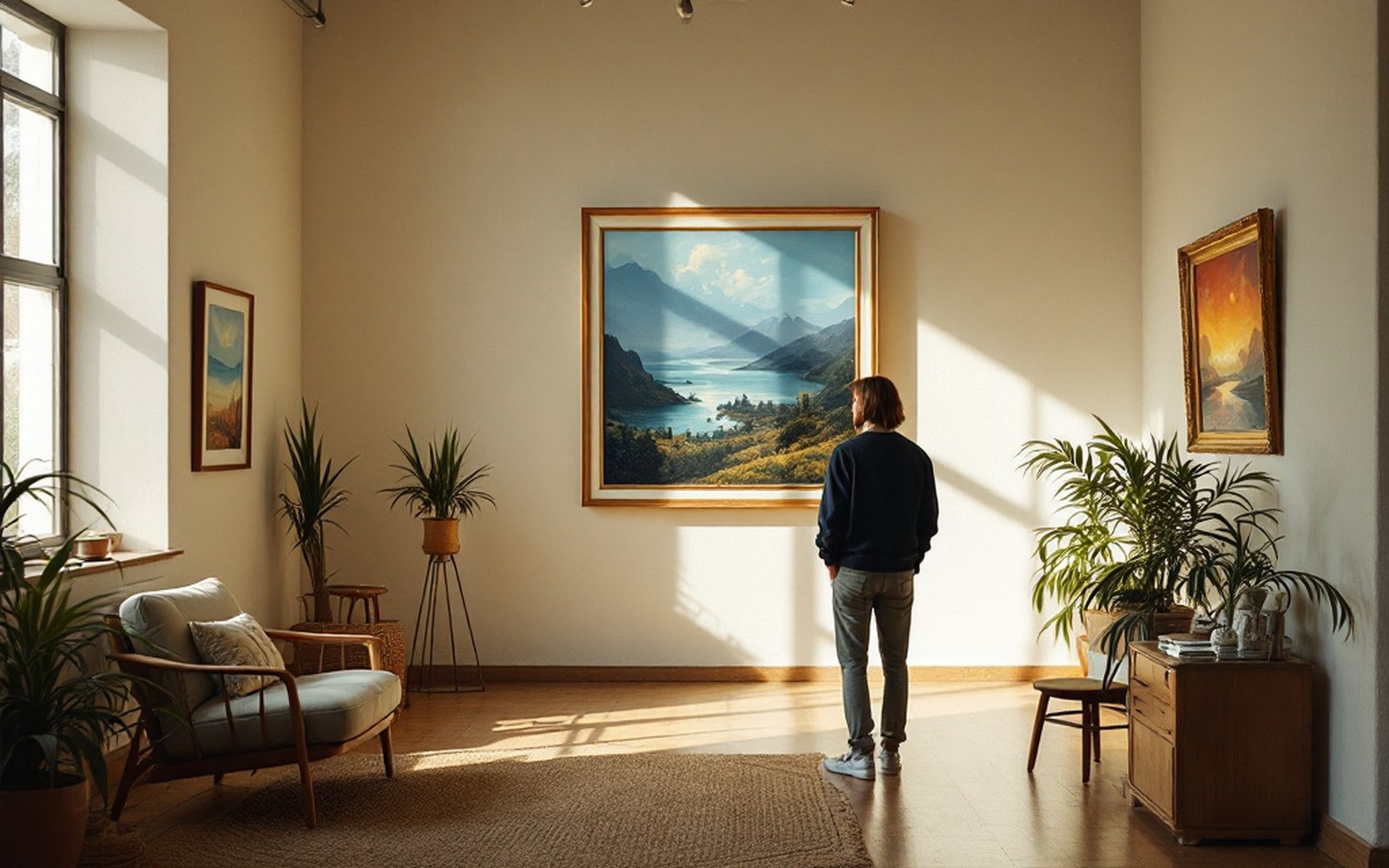
Brooks trained photographers until the market it trained them for closed
The Brooks Institute taught commercial and industrial photography here for decades and shut in 2016, after the industry that hired its graduates had already changed.

A school built for an industry that rewarded craft
For most of the twentieth century, if you needed a photograph that sold something — a car, a bottle of perfume, a plate of food — you hired a specialist. The image was made on large-format film, lit precisely, and processed in a laboratory. The craft was deep and the barrier to entry was real. The Brooks Institute of Photography, founded in Santa Barbara in 1945 by Ernest H. Brooks Sr., trained people to work at exactly that level, and for decades the arrangement made complete sense. The school's graduates moved into advertising studios, editorial departments, and film production facilities across the country. Brooks built a reputation on technical rigour and on the fact that its location — a city with exceptional light, varied terrain, and proximity to Los Angeles — gave students access to the kind of locations that commercial clients actually needed.
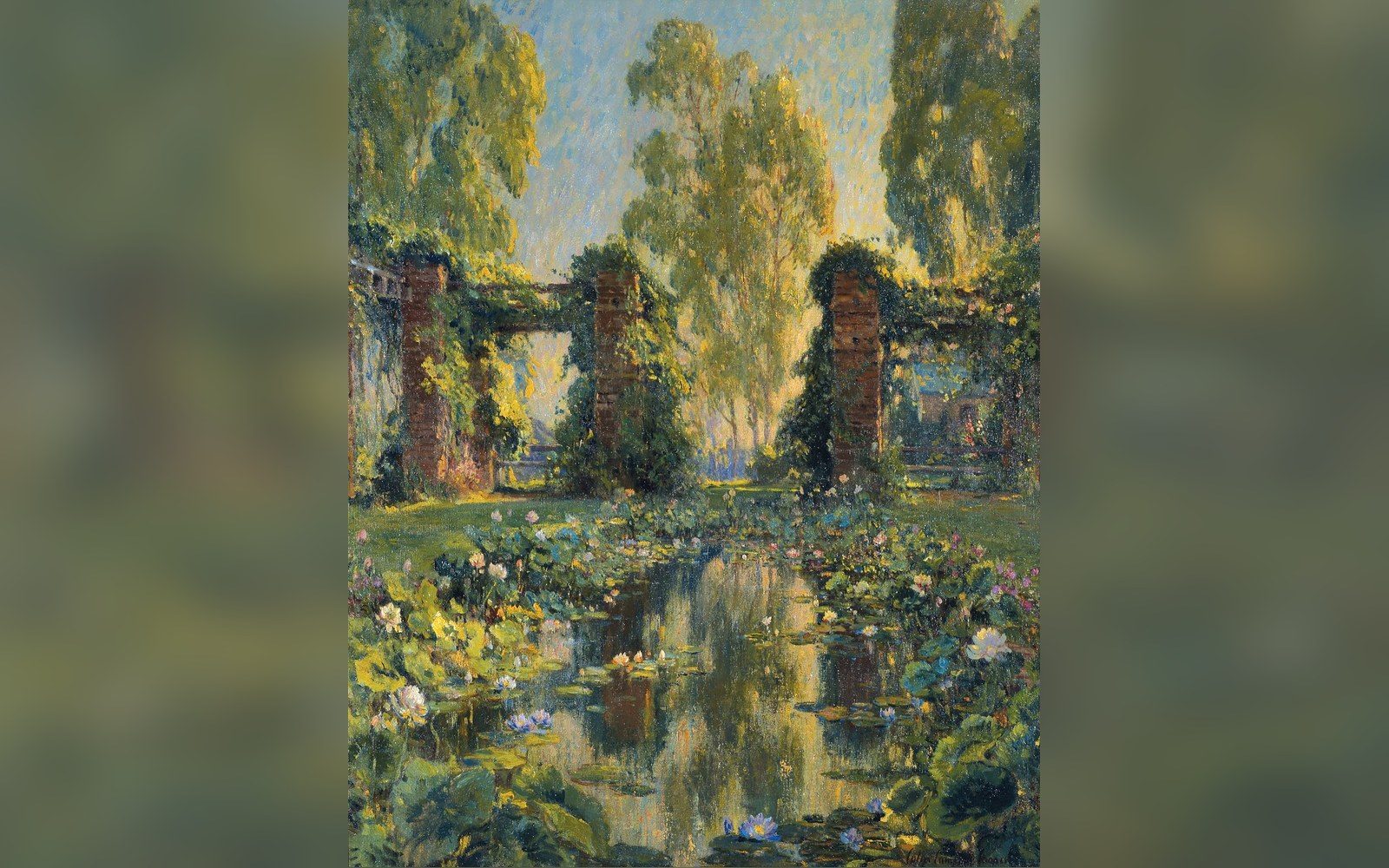
Brooks grew from a small operation into a fully accredited institution offering bachelor's and master's degrees in photography, film, and visual journalism. The campus spread across several sites in Santa Barbara and later incorporated facilities in Ventura. At its height the school enrolled more than a thousand students at a time, making it one of the largest dedicated photography institutions in the United States. The Santa Barbara setting was not incidental: the plein-air tradition that had drawn painters like Colin Campbell Cooper and Thomas Moran to this coast in the late nineteenth and early twentieth centuries had established a quiet idea that this was a place where serious visual work happened. Brooks arrived into that atmosphere and reinforced it, putting cameras where painters had once put easels.
The industry and the institution
What made Brooks legible as a school — and fundable as a business — was the assumption that commercial photography was a stable profession with a knowable skill set. A student who could control a strobe pack, read a histogram, manage a client brief, and deliver retouched files to specification was worth hiring. The curriculum reflected that. Lighting, colour theory, medium and large format technique, and darkroom chemistry were all taught seriously, not as historical curiosities but as the vocabulary of a working practice. The school also developed strong programmes in scientific and industrial photography, fields where precision mattered and where clients — aerospace firms, pharmaceutical companies, research universities — paid well for it.
UCSB's Art, Design and Architecture Museum served a different audience nearby: archiving, exhibiting, and contextualising the visual culture that Brooks was training people to produce. The two institutions rarely overlapped in mission, but together they gave Santa Barbara an unusually dense infrastructure for thinking about images.
Brooks was acquired from the Brooks family in 1999 by Career Education Corporation, a for-profit education company. The acquisition came at the beginning of a period of rapid consolidation in private vocational education, and it changed the school's financial structure fundamentally. Where Brooks had operated as a privately held school, it now functioned inside a publicly traded company whose shareholders required growth and margin. Enrolment was pushed upward. The school added programmes. But the underlying market was already beginning to shift in ways that no enrolment strategy could fix.
- 1945Brooks Institute of Photography founded in Santa Barbara by Ernest H. Brooks Sr.
- 1999Acquired from the Brooks family by Career Education Corporation, a for-profit education company
- Early 2010sFederal and accreditor scrutiny of for-profit institutions intensifies; graduate employment outcomes questioned
- 2016Brooks Institute closes; students complete existing programmes and the school ceases to operate
When the training outlasted the trade
The problem was not that photography ceased to matter. It was that the specific kind of photography Brooks had been built to teach — labour-intensive, specialist, premium — was losing its position at the centre of the commercial image economy. Digital capture had removed the cost of film and the physical friction of the laboratory. Stock photography libraries, which had existed for decades, expanded into massive online databases offering images at a fraction of what a commissioned shoot would cost. Clients who had once hired a Brooks graduate to spend two days lighting a product shot began licensing existing images instead, or commissioning work from photographers who owned their own basic equipment and charged accordingly.
The advertising and editorial markets contracted. Magazine publishing, which had employed a substantial share of professional photographers, shrank steadily as print advertising revenue migrated to digital platforms. Scientific and industrial photography, always a smaller slice of the market, remained more stable, but it was not large enough to sustain the volume of graduates a school the size of Brooks was producing. Visual journalism shifted toward video, and toward staff reductions at the outlets that had employed photojournalists. The Brooks Institute found itself training people for a market that was rewarding, increasingly, not deep technical craft but speed, volume, and the ability to work across formats with general rather than specialist competence.
Accreditation problems compounded the difficulty. Accreditors and regulators placed for-profit colleges, Brooks among them, under heightened scrutiny during the early 2010s, as concerns about for-profit higher education grew at the federal level — including questions about graduate outcomes, debt loads, and whether the careers students were trained for were accessible when they completed their degrees. Brooks specifically faced questions about whether its graduates were finding employment in the field at rates that justified the cost of the education. The answers, given the contraction of the commercial photography market, were difficult to construct honestly.
In 2016 the school announced it would close.
In 2016 the school announced it would close. The final students completed their programmes, and the institution that had shaped Santa Barbara's image culture for more than seventy years ceased to operate. The closure came as part of a broader reckoning with the for-profit model in specialist vocational training.
What remained was the physical trace and the alumni network. Graduates of Brooks continued working — in commercial photography, in film production, in visual journalism — and some stayed in Santa Barbara, contributing to the studio culture that has developed in the Funk Zone and in neighbourhoods around State Street. The equipment, the darkrooms, the purpose-built shooting stages: those dispersed. What the school had transmitted was not. The ability to read light, manage a complex location, and deliver technically controlled work does not disappear because the institution that taught it closes. It migrates into practice, into the studios of working photographers who carry Brooks in their formation even when they are solving problems the curriculum never anticipated.
A city that had sustained serious visual education for seven decades was left, after 2016, without a dedicated photography school. That gap has not been formally filled.