A town this size is not supposed to sustain one
The Contemporary Arts Forum ran from 1976 to 2013 as a non-collecting exhibition space — a kunsthalle model that usually needs a much bigger city.
A kunsthalle that outlived most predictions
Santa Barbara has roughly ninety thousand residents. The cities that typically support a kunsthalle — a non-collecting exhibition institution whose entire argument is the work on the walls right now, not a permanent collection accumulated across decades — tend to be far larger than Santa Barbara, with deeper pools of donors, audiences and artists to draw on. The Contemporary Arts Forum ran for thirty-seven years in a California beach town more famous for its courthouse and its climate, and the fact that it worked at all is worth examining.
The Forum opened in 1976, at a moment when the kunsthalle model was gaining traction internationally as an alternative to the collecting museum. Where a collecting museum acquires, conserves and interprets, a non-collecting space commits only to the present tense: it borrows work, shows it, sends it back. The overhead is lower in some respects and infinitely higher in others, because without a permanent collection to fall back on — no Impressionist room to fill a slow Tuesday — every season must be programmed from scratch. The institutional reputation rests entirely on the quality of that programming, year after year, with no safety net.
What made the Forum unusual was that it chose this model deliberately, not because it lacked the resources to collect but because it believed the argument. Contemporary work demands a different institutional frame than historical work, and a kunsthalle keeps that frame honest. The walls stay empty between shows. The institution cannot coast.
Paseo Nuevo and the politics of location
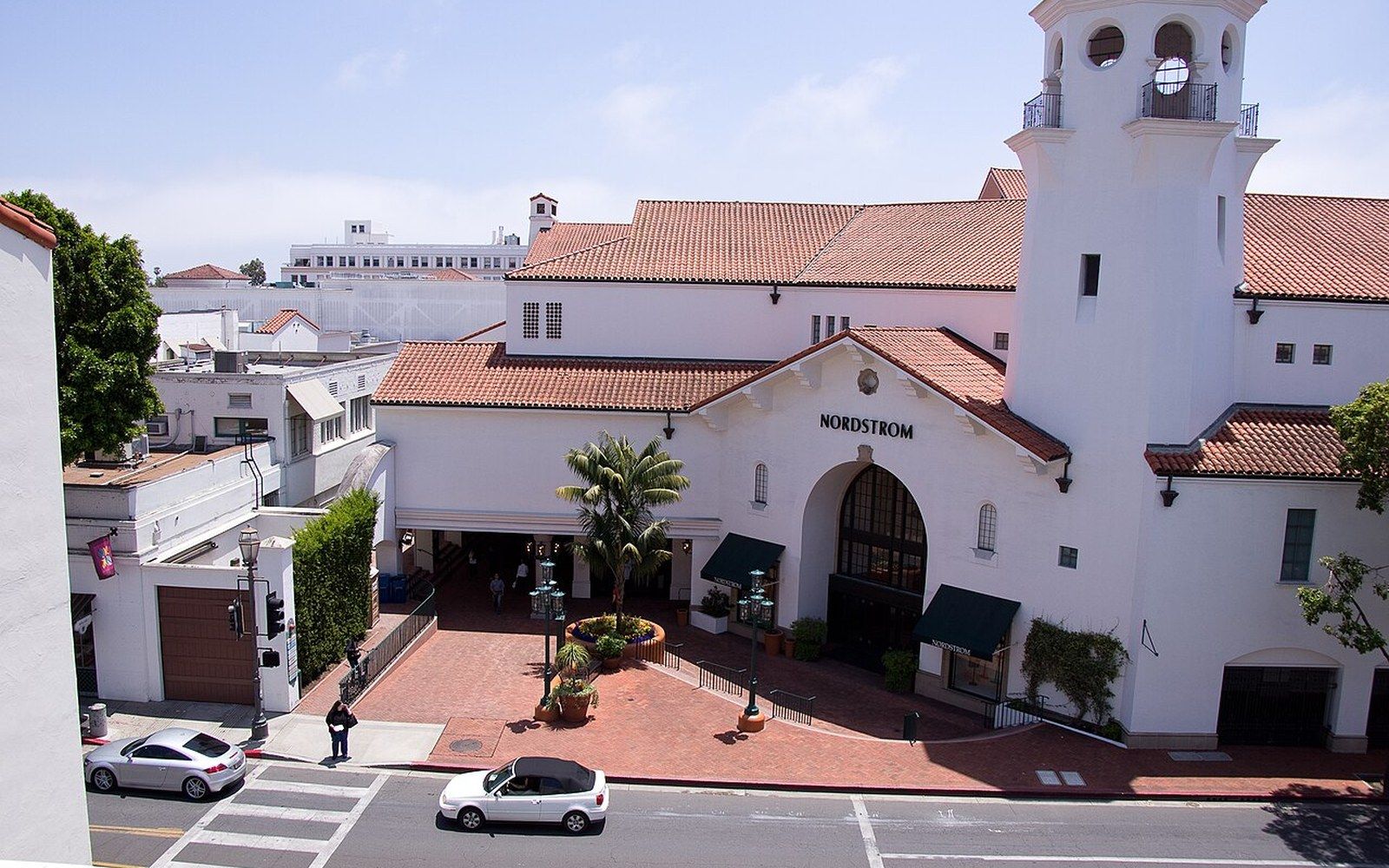
For much of its history, the Forum occupied space inside Paseo Nuevo, the open-air shopping centre on State Street. This was either a provocation or a masterstroke, depending on your appetite for institutional irony. A contemporary art space embedded in retail — above a food court, beside chain stores — could have been read as a capitulation. Instead it functioned as something close to the opposite: it put contemporary work in front of people who had not necessarily decided to seek it out. You came for lunch or shoes and found yourself in front of a video installation or a conceptual photography series. Access was lateral rather than aspirational, which is rarer than it sounds.
The location also kept the Forum embedded in the city rather than elevated above it. Santa Barbara's art institutions have a complicated relationship with the town's self-image — a place that curates itself aggressively through the Architectural Board of Review, that polices its Spanish Colonial Revival streetscape with genuine institutional force, and that can tip into a kind of preserved-amber aesthetic complacency. A kunsthalle inside a mall was a useful irritant.
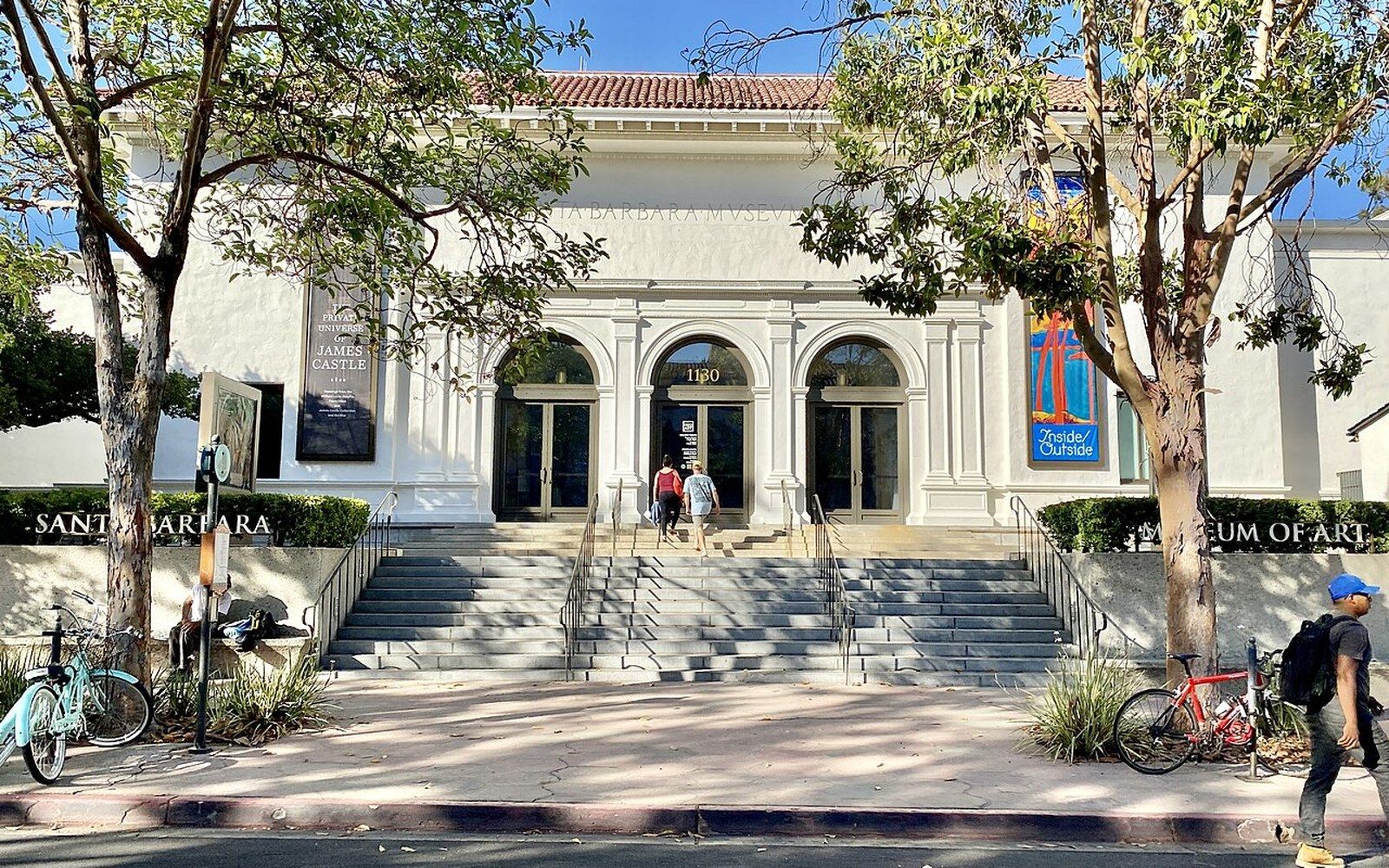
The Forum used that position to programme work that the Santa Barbara Museum of Art, with its broader civic mandate and its permanent collection to steward, was not positioned to show. Where the Museum of Art — one of the stronger regional collecting institutions on the West Coast, with holdings that range from antiquities to twentieth-century American painting — tends toward the survey and the retrospective, the Forum could take a risk on a living artist at a formative moment, or commission work that responded to the specific conditions of the space and the city. That division of labour, unwritten but functional, gave Santa Barbara more range than its population would ordinarily support.
What the model demands
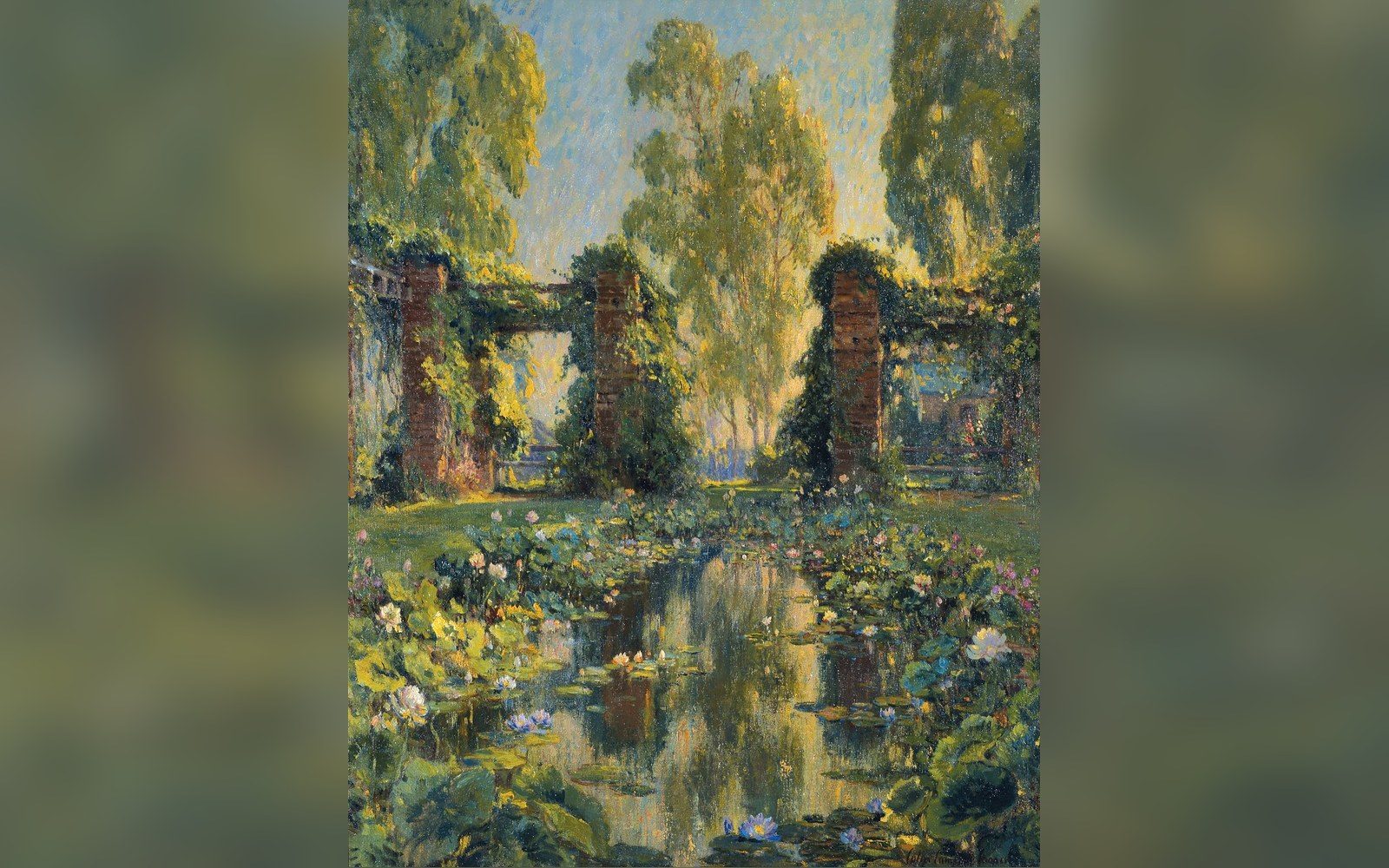
Running a kunsthalle in a small city is a staffing problem as much as a programming one. The institutions that sustain this model in larger cities draw on deep pools of curators, critics, collectors and funders who move fluidly between organisations. Santa Barbara's art ecosystem has genuine depth — the Brooks Institute produced generations of photographers; UCSB's Art, Design and Architecture Museum holds architectural drawings and art collections of real scholarly weight; the plein-air tradition that brought Thomas Moran and Colin Campbell Cooper to this coast in the late nineteenth century left a residue of collector culture that persists — but it is not an infinite depth. The Forum had to build its audience rather than inherit it.
What it built, over three and a half decades, was a programme that regularly reached beyond the region. Artists who showed at the Forum were not showing in Santa Barbara instead of somewhere else; the Forum was part of a circuit. That positioning mattered enormously for the institution's ability to attract work, and it mattered for the city's ability to claim a relationship with contemporary practice that was not merely provincial.
The model also demands a particular relationship with money. A collecting museum can, in extremis, deaccession. A kunsthalle has no such option. The Forum depended on programming grants, individual donors and the institutional support structure of a community that was asked repeatedly to fund something that, by design, left nothing behind. Every show came down. Nothing accumulated. The ask was for belief in the act of showing itself, which is a harder sell than naming a gallery after yourself.
- 1976Contemporary Arts Forum founded
- 1976–2013Forum operates as non-collecting exhibition space (kunsthalle model), for most of its run inside Paseo Nuevo on State Street
- 2013Forum closes
- Post-2013MCASB continues the non-collecting contemporary programme
After 2013
The Forum closed in 2013. MCASB — the Museum of Contemporary Art Santa Barbara — emerged from that closure carrying forward the Forum's essential commitments: contemporary work, non-collecting, the argument that a small city can sustain serious engagement with art being made now. The name changed; the institutional logic did not. Whether MCASB has managed to hold the Forum's position on the national circuit, and whether it has found a physical home that does for the city what the Paseo Nuevo location did — that uncomfortable, productive placement of art inside everyday life — is a question the programme continues to answer.
What the Forum's run established, beyond reasonable dispute, is that the kunsthalle model is not inherently scale-dependent. It depends on conviction, on programming, on a community willing to fund impermanence, and on a curatorial intelligence that can make the institution's limitations look like choices. Thirty-seven years in a town this size is not an accident. It is a sustained argument, made season by season, that the act of showing contemporary work seriously is sufficient justification for an institution — that you do not need a collection, a grand entrance or a million-person catchment to matter. You need the work, the walls and the will to keep doing it.
Santa Barbara, for all its self-curation and its compulsory architectural style and its weather-poster reputation, kept doing it for longer than most cities twice its size managed. That is the thing worth noting.