The gallery sat inside a shopping centre, and that was the argument
Contemporary art in Santa Barbara had no dedicated building. That turned out to be the point.
Above the shops
The Contemporary Arts Forum opened in 1976 with a premise unusual even by the standards of alternative art spaces: it would collect nothing. No permanent collection, no storage costs, no acquisitions committee second-guessing a curator's nerve. The programme was the institution, and the institution would be as good as its last show. That model — the kunsthalle, as it had been practised in Europe since the nineteenth century, meaning a non-collecting exhibition hall sustained by programming alone — was rare in California and almost unheard of in a city of Santa Barbara's size.
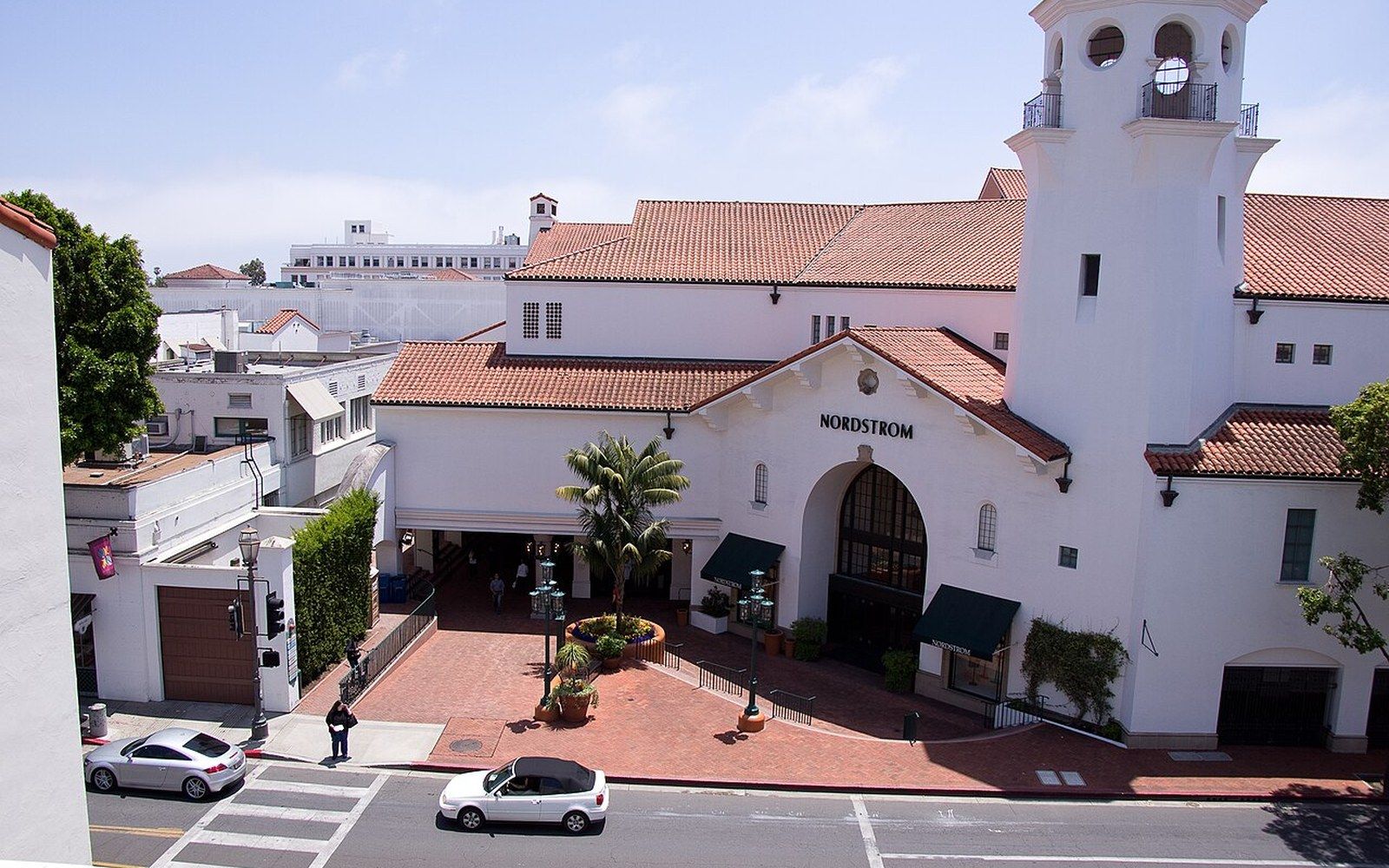
What made the Forum's situation stranger still was where it eventually settled. When Paseo Nuevo opened as a downtown shopping mall in 1990, the Forum moved in. The gallery occupied the upper level of a retail complex on State Street, directly above the kind of stores that anchor American commercial life. You could buy a sweater downstairs and walk upstairs to encounter work that challenged every assumption you brought with you. The juxtaposition was not incidental — it was, for anyone paying attention, the argument the Forum was making about where art belongs.
A dedicated arts building, however beautifully designed, announces itself. It selects its visitors before they arrive; the address alone tells you whether you are the intended audience. A gallery inside a shopping centre has no such filter. Shoppers drifted in. Tourists who had come to look at the Spanish Colonial Revival streetscape found themselves in front of video installations and conceptual sculpture. The foot traffic that retail depends on became, for the Forum, an accidental constituency. Some of them left confused. Some of them came back.
What the programme did with the space
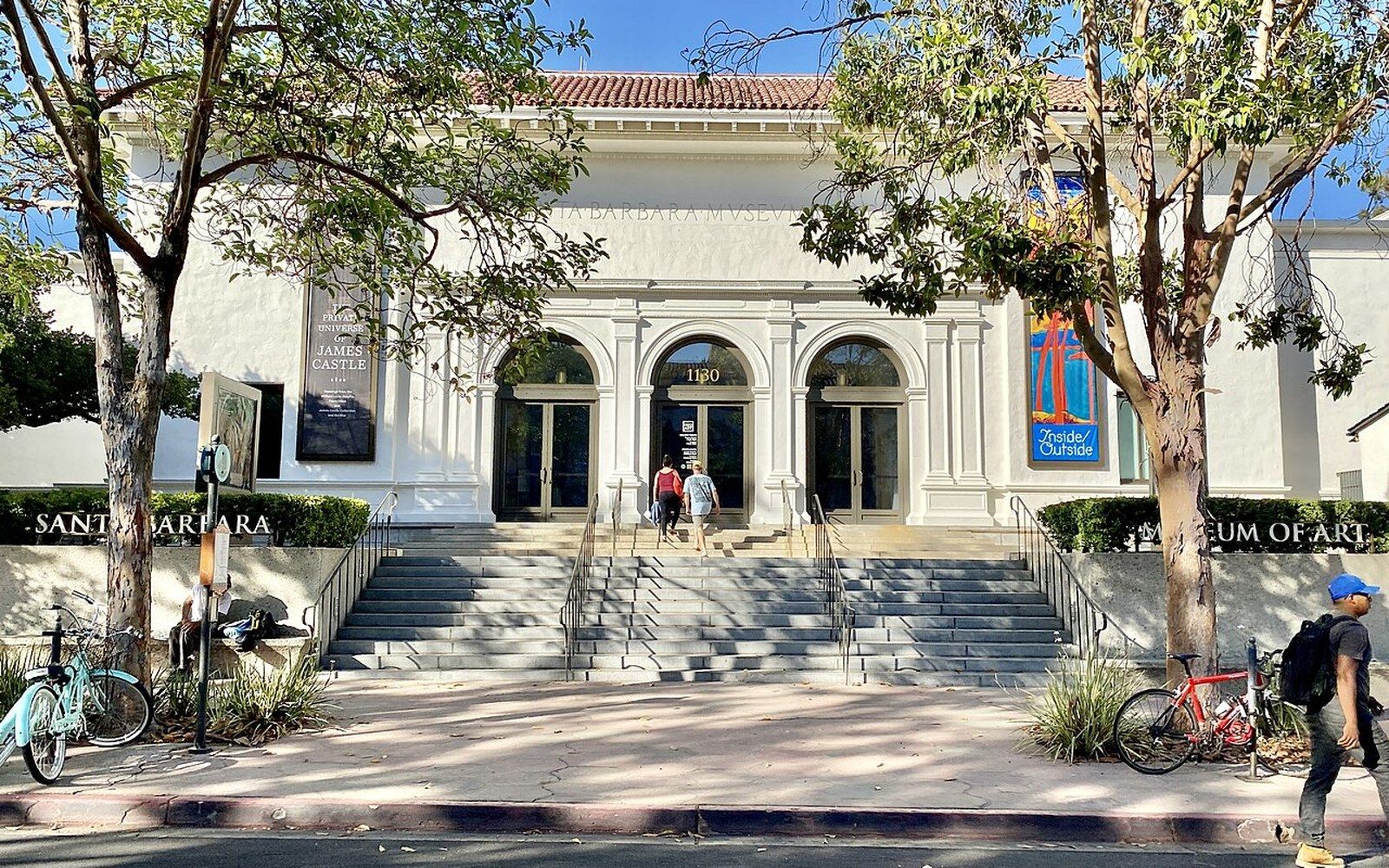
The Forum used its unusual position to show work that the Santa Barbara Museum of Art, with its collecting obligations and broader civic audience, was not structured to present. The Museum sits on State Street and holds a permanent collection that runs from antiquity to the twentieth century; the Forum's job was the present tense. Over nearly four decades it brought in artists whose reputations were still being made, mounted shows that travelled to other institutions, and built a programme that punched considerably above the city's weight.
Richard Ross, the Santa Barbara-based photographer whose long-running documentary work examined institutions — prisons, juvenile detention facilities, abandoned museums — showed work there. Ann Diener, whose practice engaged with place and perception, was part of the community the Forum sustained. The UCSB Art, Design and Architecture Museum, across town on the university's lagoon campus, occupied different ground: it held architectural drawings and design archives alongside its art programme, and its audience was shaped by the campus. The Forum's audience was whoever walked up the stairs.
That accessibility had a cost. The space was what a shopping centre gives you: a compromise of ceiling heights, sight lines arranged around retail logic, no loading dock scaled for major installations. Curators worked within those limits, and sometimes the limits showed. But the argument was not that Paseo Nuevo was an ideal gallery. The argument was that being there — above the food court, beside the cinema, inside the daily life of the city — was worth more than ideal.
- 1976Contemporary Arts Forum founded
- 1990Paseo Nuevo mall opens; Forum moves in
- 2013Forum closes after thirty-seven years
- 2013 onwardsMCASB continues the non-collecting programme
The end and what it left
The Contemporary Arts Forum closed in 2013, after thirty-seven years. The reasons were financial, as they almost always are when a kunsthalle folds: without a collection to underwrite its identity, a non-collecting space lives and dies on grants, donations and the willingness of a city to keep choosing it. Santa Barbara kept choosing it for longer than most comparable cities would have managed.
What followed was not closure so much as transformation. The Museum of Contemporary Art Santa Barbara — MCASB — carried the Forum's non-collecting mission forward, working from a different address but the same essential conviction: that the city needs a space whose only job is to show what is being made now. The Paseo Nuevo chapter remains the clearest version of that argument, because it made the argument spatially. The work was upstairs. The world was downstairs. The door between them was open.